
The Time Between Spell Casting and Manifestation: Why the Middle Can Feel Quiet—or Worse
There is a moment after a spell is completed that surprises people, even when they are spiritually experienced.
The work is done. The intention has been placed. The energy feels sealed, deliberate, real—and then… nothing. Or worse: silence thickens, communication stalls, emotions spike, and the situation seems to recoil. Some clients describe it in the most brutal way: “The spell was completed and he blocked me the next day.” Or, “Everything felt fine and then it got colder.”
This is the part no one talks about clearly enough, because it doesn’t fit the fantasy of instant results, and it doesn’t fit the fear narrative either. It is not proof that the work “failed,” and it is not proof that it “worked.” It is the middle—the time between casting and manifestation—where the visible world has not caught up yet, but the conditions beneath it are often already moving.
In Coven work, we treat this phase with respect. Not drama. Not superstition. Respect.
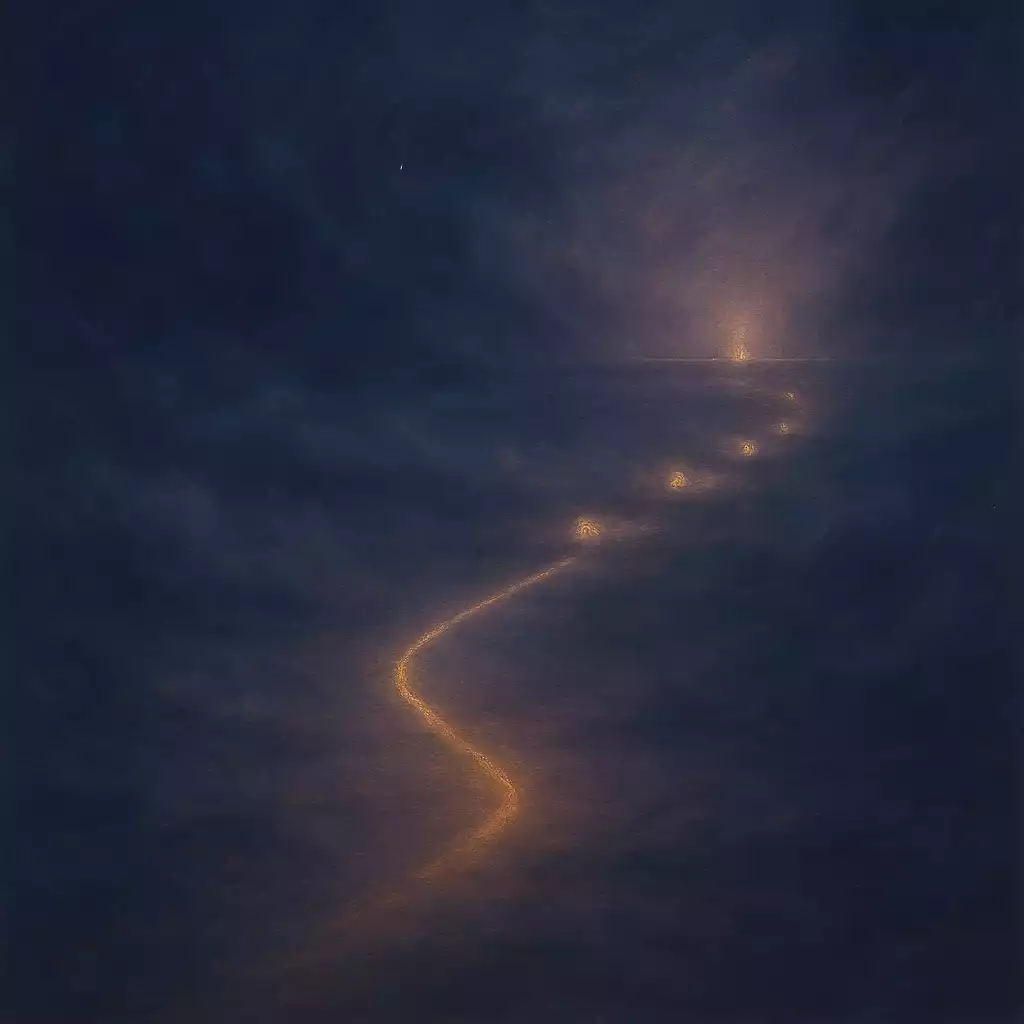
Because manifestation is not a light switch. It’s a route.
And the route is sometimes built in the dark.
The Middle Is Not Empty Time
Most people picture manifestation as an event. A message arrives. A door opens. A result lands. Something changes in the physical world and you can finally breathe.
But before the event, there is a construction phase. The field has to reorganize around the intention—emotionally, circumstantially, practically. That reorganization isn’t always visible, because it often happens in places you cannot see directly: someone’s private thoughts, a shift in timing, a softening of resistance, the release of an old attachment, the rearrangement of external pressures.
This is why the middle can feel deceptively quiet. You are looking for proof in the external world, while the external world is still catching up to the new shape the work is creating.
Sometimes the first movement is internal: your nervous system settles, your compulsive urgency softens, your emotional field becomes less tangled. Sometimes the first movement is circumstantial: a third-party complication weakens, a logistical barrier changes, a timing window opens. Sometimes the first movement is hidden inside the other person: a loosening, a remembering, a conflict between pride and feeling, a quiet re-evaluation that doesn’t announce itself.
The middle is where reality makes room.
And making room can look like nothing—until it doesn’t.
What’s Actually Happening in the Background
To keep this grounded and useful, here are the three layers that often shift during the in-between. This is not a checklist of “signs.” It’s a way to understand why manifestation has a delay at all.
1) The Emotional Field Settles Into a New Shape
Even when the result is not visible yet, the emotional atmosphere around the situation can change. Sometimes this shows up as relief. Sometimes it shows up as a strange calm. Sometimes it shows up as a temporary spike of feeling—because when a field starts to reorganize, what was suppressed can rise briefly on its way out.
If you’ve ever cleaned a room that was neglected for months, you know this truth: it looks worse before it looks better, because the dust has to lift before it can leave.
2) The Pathway Repositions
Many outcomes cannot appear in their final form until smaller pieces move into place first. A conversation needs a moment of openness. A reconciliation needs a softened doorway. An opportunity needs a decision, a schedule shift, a yes from someone who hasn’t said it yet. The middle is where those “bridge pieces” begin to align—often through ordinary events that don’t look magical on the surface.
This is why the middle can feel mundane. The route is being laid in real life, not in a fantasy.
3) Resistance Loosens (and Sometimes Protests)
Resistance is not always malice. Sometimes it is fear. Sometimes it is pride. Sometimes it is the nervous system protecting itself with distance because closeness would require vulnerability. When the field begins to change, resistance can loosen quietly—but it can also protest briefly, like an old pattern making one last appearance before it loses its grip.
This is one reason the middle can feel paradoxical: movement begins, and something tightens.
Not because the work is “wrong.” Because the pattern is being touched.
Why Things Can Look Stagnant
Stagnation is not always a stop. Sometimes it is a hold—a pause where circumstances are reorganizing behind the scenes.
In the middle, reality often becomes more still on the surface for one of three reasons:
- the situation is waiting for a timing window (a conversation opportunity, travel, a life pressure to pass)
- the emotional field is stabilizing (so the next move doesn’t collapse)
- the pathway is building through ordinary steps that don’t announce themselves as progress
This is why mature spellwork requires patience without passivity. You are not asked to do nothing. You are asked not to interfere—because interference comes from panic, and panic tends to reach for outcomes with hands that are too tight.
If you need guidance for holding yourself steady during this phase, keep it contained in one place: what to do while waiting for results.
When the Middle Looks Worse Before It Looks Better
Now let’s speak to the question that brings people to our inbox.
“It got worse.”
“He blocked me.”
“We were warming up and then it snapped shut.”
This can be frightening, especially when you interpret it as final. But in our experience, “worse” in the middle usually falls into one of these categories:
A Boundary Reaction
Sometimes, when emotional pressure shifts—even subtly—someone reacts by tightening control. Blocking, withdrawing, going cold, disappearing. This is not romantic, and it is not something to chase. It’s often a protective reflex: If I can’t manage what I feel, I will manage the access.
A Nervous System Spike
When people feel pulled into something meaningful, their fear can flare. They may feel guilt, vulnerability, confusion, shame, or panic. They may react with distance because distance feels safer than emotional exposure.
An Old Pattern Flare
Some connections have a familiar loop: closeness → fear → withdrawal. When the field begins to change, the loop can show itself clearly—sometimes one last time—because old patterns do not dissolve politely. They reveal themselves on their way out.
A Real External Trigger
And sometimes, it’s none of the above. Sometimes it’s life: stress, family pressure, a third party, work chaos, an unrelated emotional crash. The middle is still the middle; it doesn’t mean every shift is caused by the work. It means you are watching a living human situation unfold.
Here is the most important ethical anchor we hold in this section:
If someone blocks you or makes their boundary clear, we respect it. We do not advise chasing, testing, provoking, or pushing contact to “see if it’s working.” If there is a path forward, it will not require you to abandon your dignity to access it.
And if you are unsure what is real movement versus emotional noise, keep that guidance where it belongs: signs a spell is working.
We also hold a sober possibility: sometimes a block is simply a decision, not a phase. This page is here to explain the middle—not to promise any specific outcome.
The Bridge of Incidents
Most manifestation does not arrive as a single leap. It arrives as a bridge.
A bridge is made of small events that create a route: a chance encounter, a timing shift, a conversation opener, a softened mood, a logistical door that wasn’t open before. These events can look ordinary from the outside, which is why people miss them. They are waiting for fireworks, while reality is rearranging itself quietly, one plank at a time.
This is also why trying to control the exact route usually backfires. The mind wants certainty, so it scripts the steps: He will text on Tuesday, he will apologize, he will ask to meet. But manifestation often chooses a different route, because the cleanest path is not always the one you can predict.
In the middle, your job is not to micromanage the bridge.
Your job is to stop burning it down with panic.
What Interference Looks Like (Keep This Part Small)
Interference isn’t “having emotions.” It’s the behaviors that come from trying to relieve uncertainty by grabbing at the outcome.
It looks like: compulsive checking, repeated testing, oversharing, provoking contact, or narrating the process to people who don’t understand it. The more you do these things, the more you agitate the field—and agitation tends to slow stabilization.
If you want the full framework for strengthening results without forcing, read how to enhance your spellwork.
Where Time Fits In (Without Turning This Into a Timing Page)
The middle can last days, weeks, or longer depending on the situation and the conditions around it. But this page is not here to give you a schedule—it is here to explain why a schedule exists at all.
If you want realistic timeframes and what most people experience as the work unfolds, keep that map in one place: spell timing and realistic expectations.
Closing Reflection
The time between casting and manifestation is not a punishment. It is not a void. It is not “nothing happening.”
It is the phase where reality repositions, where old patterns loosen, where the pathway forms quietly, and where the outcome finds a route that can actually hold it.
Sometimes the middle looks like calm. Sometimes it looks like silence. Sometimes it looks like a flare of resistance that makes you question everything. But if you treat every surface shift as final, you will exhaust yourself in the very phase that asks for steadiness.
So let this be the anchor you return to:
The work is not always visible while it is working.
And what is meant to arrive does not require you to abandon yourself in order to receive it.
Last Updated on December 26, 2025 by Abigail Adams




Leave a Reply