
Can You Tell if Someone Cast a Love Spell on You?
Table of Contents
When You Start Wondering If It’s a Love Spell
There are certain questions people don’t ask out loud—because even thinking them feels like admitting something fragile.
Maybe you met someone and the pull is unusually strong. Maybe you can’t stop replaying a conversation. Maybe your desire doesn’t feel like desire anymore, but like a loop you can’t step out of. And somewhere in the middle of that intensity, a thought arrives that sounds irrational and yet weirdly relieving:
What if this isn’t just me?
What if someone did something?
If you searched “Can you tell if someone cast a love spell on you?” you’re probably not looking for drama. You’re looking for clarity—something steady enough to hold onto when your mind keeps swinging between fascination and fear.
So let’s begin with the most honest foundation:
In our experience, true love-spell influence is less common than people think—but the feelings that lead you here are real.
But the feelings that lead you to suspect one are real—and they deserve to be handled with care, not ridicule and not panic. Because what gets labeled “a spell” is often a mix of very human forces: attachment, chemistry, anxiety, grief, loneliness, mixed signals, longing. Sometimes it’s a nervous system trying to make certainty out of emotional uncertainty. Sometimes it’s a connection that lights you up and unsettles you at the same time.
And sometimes—more rarely—there is an energetic influence in the picture. Not the movie-version. Not dramatic mind control. More like a kind of interference: a haze around your clarity, a tug on your attention, a feeling that your inner “no” isn’t as easy to access as it normally is.
This guide is designed to help you tell the difference—without spiraling, without accusing anyone, and without giving your power away to fear. You’ll learn what love spells actually are (and what they are not), what signs people think point to spellwork, what’s more likely to be happening in most cases, and how to restore your sense of agency either way.
Because the goal isn’t to prove a theory.
The goal is to come back to yourself—clear, steady, and in possession of your own heart.
What a “Love Spell” Actually Means
Before you can tell whether something is happening, you need language that doesn’t distort the situation. A lot of the panic around love spells comes from the assumption that spellwork equals control—and that assumption makes people interpret every intense feeling as evidence.
In reality, “love spell” is an umbrella term.
If you want the full, grounded framework—what love magic can (and cannot) do, ethics, timing, and outcomes—start here: Love Spells Explained: How Love Magic Works & What to Expect.
Some people use it to mean attraction magic. Others mean reconciliation work. Others mean sweetening, emotional openness, or the clearing of blocks. And then there’s the internet’s favorite: obsession and domination—usually described in extreme, fear-heavy ways because fear sells.
Coven’s approach is simple: love magic should never be framed as overriding someone’s will. Healthy spiritual practice supports clarity, honest connection, and aligned outcomes—not coercion.
If you want the deeper mechanics—how intention becomes emotional movement—read: How Love Spells Work — From Intention to Emotional Movement.

Attraction vs. Attachment vs. Obsession
Sometimes the “spell feeling” is not a spell at all. It’s a nervous system response that feels supernatural because it’s intense and unfamiliar.
- Attraction feels like warmth, curiosity, magnetism, creativity. You still feel like yourself.
- Attachment feels like bonding and investment—sometimes secure, sometimes anxious. You can still choose.
- Obsession feels like narrowing. Your world shrinks. Your self-respect becomes negotiable. Your clarity starts bargaining.
If you’re trying to discern, this distinction matters more than any list of “signs.” Because what you’re really trying to measure is not “magic.” You’re trying to measure agency—how much you can access your own inner yes and no.
Ethical Love Magic vs. Coercive Claims
Ethical love magic (in its healthiest form) is usually aimed at one of three things:
- Opening roads: removing confusion, miscommunication, emotional distance.
- Amplifying connection: sweetening, warmth, vulnerability, mutual magnetism.
- Calling in aligned love: drawing in a relationship that matches your values.
Coercive claims are different. They’re built on panic, possession, and the fantasy of control. And they often show up in the same places that offer “guaranteed results” and “instant domination”—because the business model depends on making the reader feel unsafe until they buy relief.
If a love spell conversation makes you feel small, helpless, or hunted, that is not spiritual truth. That is marketing.
Why It Can Feel Like a Spell When It’s Not
A love-spell theory often shows up when your inner logic breaks: you know what you should do—detach, stop checking, stop hoping—yet you keep circling the same emotional orbit. Uncertainty is uncomfortable, so the mind tries to name the invisible force behind the loop.
Sometimes there is energetic entanglement. Most of the time, it’s human—chemistry, attachment, and a nervous system searching for certainty.
Chemistry, Limerence, and the Nervous System Loop
Limerence can feel like fate. It thrives on uncertainty and intermittent reinforcement—just enough warmth to keep you reaching, not enough stability to let you rest. The nervous system experiences this as urgency, not “a complicated situation,” which is why the pull can feel almost spiritual.
Anxious Attachment and Hot–Cold Dynamics
If you’re anxiously attached—or triggered into it—you become hyper-alert to distance. Hot–cold behavior trains the brain to obsess: you keep checking, decoding, trying to win back certainty. That state is where “spell fear” grows, even when the cause is simply an old wound being pressed.

Grief, Loneliness, and the Brain’s Need for Certainty
When you’re depleted, connection can become a lifeline. A person turns into a symbol of relief, safety, and being seen. And when desire carries too much weight, it stops feeling like desire and starts feeling like compulsion.
Discernment isn’t dismissing your feelings—it’s holding them gently enough that they don’t take over your life.
Signs People Associate With Love Spell Influence
Let’s handle this part carefully.
Most “signs” lists online are written to keep you frightened: vivid, dramatic, and vague enough that almost anyone can relate. That style may go viral, but it does not protect you. It makes you interpret normal emotional intensity as evidence of external interference.
At Coven of the Goddess, our approach is different: we look for patterns that genuinely matter—patterns that relate to agency, clarity, and energetic boundaries.
The Difference Between “Signal” and “Story”
Your mind can create a story from almost anything:
- “I dreamed about them twice—this must mean something.”
- “I saw their name—this is a sign.”
- “I feel pulled—so I’m being pulled.”
Sometimes dreams are processing. Sometimes your attention is primed. Sometimes a name is just a name.
A signal is something that consistently affects your ability to think, choose, and return to yourself.
So we’re not looking for spooky coincidences. We’re looking for how your inner life behaves over time.
Practical Clues That Matter More Than Omens
If you’re trying to discern energetic influence, focus on what’s repeatable and contextual—not spooky coincidences. In real-life cases, the most useful clues are usually practical: something changed after a specific contact, object, or disclosure, and the pattern holds even when you ground yourself and step back.
- A sudden fixation that begins right after receiving a personal item or gift from someone who practices (or who is closely connected to a practitioner).
- Repeated “taglock” behavior—requests for hair, photos, full name, date of birth, worn clothing, handwriting, or other personal identifiers framed as “necessary.”
- You were explicitly told that work was done “on you” (not vague social media content, but a direct statement from the person or someone involved).
- A noticeable spike in emotional or energetic disturbance after direct contact—especially after specific messages, calls, visits, or exchanges.
- The intrusive pull persists even after you apply boundaries and grounding (i.e., you stabilize, you step back, and the “static” still clings in a consistent way).
A Short List of Patterns Worth Noticing
These are not “proof.” They are simply patterns that may be worth investigating—especially if they appear suddenly, intensely, and out of character for you:
- A sharp drop in clarity: you feel foggy, indecisive, or strangely unable to land on what you know is right.
- Intrusive thought loops that feel disproportionate: your mind repeats the same images or scenarios even when you try to redirect.
- A “tug” sensation after contact: you feel pulled, unsettled, or emotionally hijacked right after texting, seeing their content, or being near them.
- A collapse of boundaries that surprises you: you tolerate behavior you normally would not, or you feel unable to hold your “no.”
- Energetic residue: you feel emotionally “sticky,” like you can’t wash them off—especially if the connection is brief or not deep enough to explain the intensity.
- A narrowing of your world: your routines, goals, and self-respect begin orbiting the person.
Notice what’s missing here: no talk of “random headaches,” “a strange smell,” “seeing a black cat,” or “bad luck.” Those are classic fear-bait items because they’re universal and untestable.
The real question isn’t “Are there signs?” The question is:
Do I feel like myself—and can I access my agency?
Which brings us to the most important part of this article.
The Agency Test
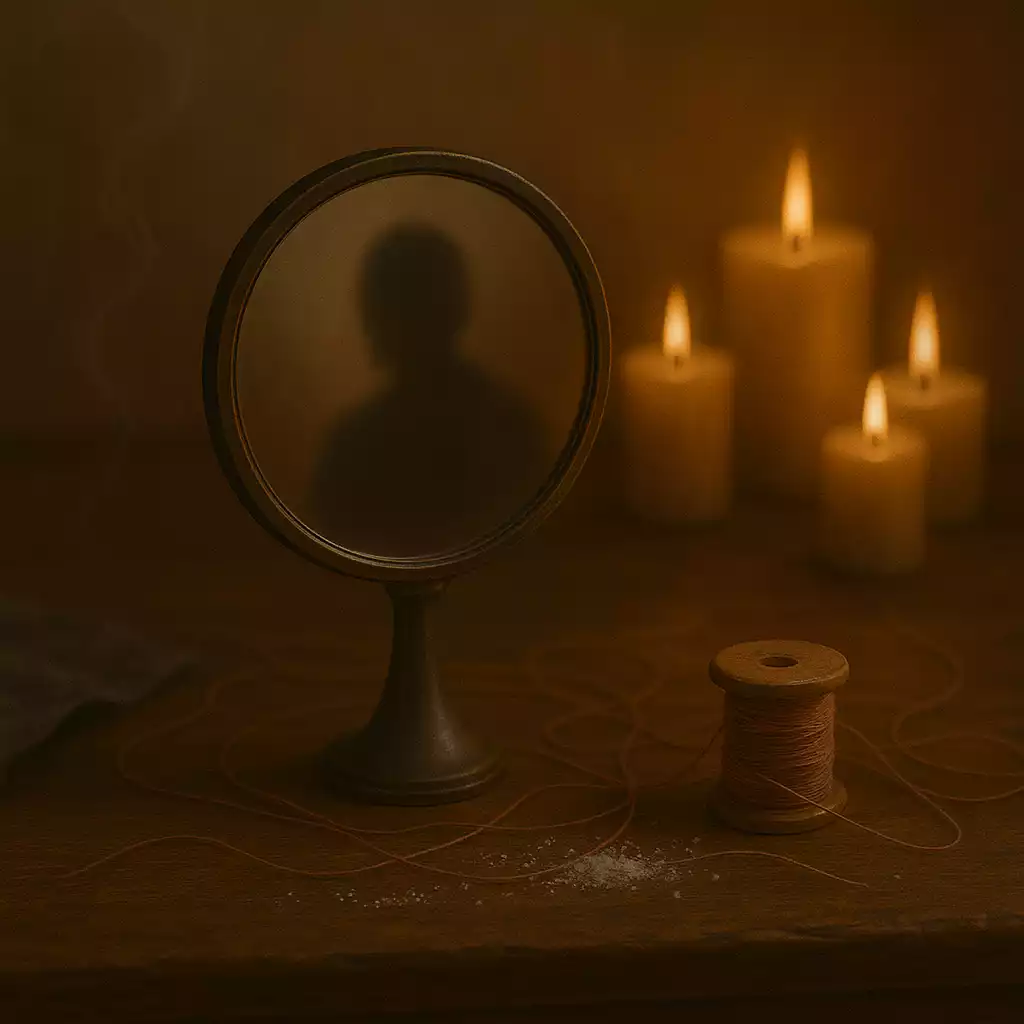
Love magic is real—but real love magic should never strip you of yourself.
In ethical practice, love work supports clarity, openness, and aligned connection. It doesn’t erase consent. It doesn’t reduce you to obsession. And it never requires you to abandon your boundaries in the name of “fate.”
That’s why discernment isn’t about collecting spooky signs. It’s about agency: How easily can you access your inner yes and no? Do you feel more like yourself—or less? Does your world expand, or narrow?
So the most powerful diagnostic isn’t supernatural. It’s practical.
Can You Access Your “No” Without Panic?
Try this gently. Not as a confrontation, but as an internal check:
When you imagine saying no to this person—no contact, no chasing, no bargaining—what happens in your body?
- Do you feel calm sadness, like a clean grief?
- Or do you feel panic, agitation, and urgency—as if saying no is dangerous?
Panic doesn’t mean you’re spelled. Panic means your nervous system believes the attachment is survival. That can happen for many reasons: trauma, scarcity, intermittent reinforcement, longing, loneliness, old wounds.
But it’s still useful data.
Because if you cannot access “no” without feeling unsafe, the first priority is not “proof.” The first priority is stabilization.
Do You Feel More You — or Less You?
Healthy love—spiritual or ordinary—tends to expand you. It makes your life feel more alive. It supports your self-respect. It returns you to your best instincts.
Unhealthy entanglement narrows you. It makes you compromise. It makes you bargain with your dignity. It makes you feel like you’re losing your center.
Ask yourself:
- Do I feel more creative, grounded, and whole?
- Or do I feel consumed, restless, and small?
Again: not proof. Just truth.
Does This Expand Your Life, or Narrow It?
This one is the clearest.
If the connection is real and aligned, your life tends to widen: friendships, routines, goals, self-care, energy. Even if you’re in longing, you still have a self.
If the connection functions like a fixation, your life shrinks. You stop doing the things that stabilize you. You start negotiating your boundaries. You begin living in reaction.
When your life narrows, your discernment goes with it.
So if you take nothing else from this guide, take this:
Your agency is the standard.
What to Do If You Suspect Influence
You don’t need to accuse anyone. You don’t need to spiral. You don’t need to “prove” magic in a courtroom inside your mind.
You need one thing: a clean return to center.
Here are two micro-practices—minimal, elegant, and intentionally non-dramatic. They’re designed to restore clarity whether the cause is emotional, psychological, energetic, or a blend of all three.
A 90-Second Clarity Reset
Do this when you feel the loop rising.
- Put both feet on the floor.
- Place one hand on your chest and one on your belly.
- Inhale for a count of 4. Exhale for a count of 6. Repeat 8–12 times.
- Then name—quietly—three true things:
- “I am safe in this moment.”
- “I do not need certainty right now.”
- “I choose clarity over story.”
You’re not “doing a spell.” You’re reclaiming your nervous system.
And the nervous system is where obsession is fed.
A Simple Return-to-Self Rinse
Water is one of the most universally grounding cleansing symbols because it is physical, immediate, and calming. Keep it simple.
In the shower (or washing your hands), do this:
- Let water run over the back of your neck and shoulders.
- Imagine any energetic residue rinsing away like dust.
- Gently sweep your hands from crown to shoulders to arms (like brushing off lint).
- End with one sentence: “What isn’t mine releases now.”
Then stop. Don’t add ten more steps. The power here is not complexity—it’s decisiveness.
Boundaries That Restore Your Power
If you’re truly trying to discern, boundaries are not punishment. They’re a diagnostic tool.
Try a 7-day boundary experiment:
- No checking their social media.
- No rereading texts.
- No “accidental” music loops that reopen longing.
- If you must communicate, keep it simple and direct.
Then observe:
- Does your clarity return?
- Do you feel calmer?
- Do you feel more like yourself?
If your clarity returns with boundaries, you’ve learned something important. If your clarity does not return—and the fog feels persistent—then you may want deeper support.
A gentle next step (if you want spiritual support)
If you’ve tried grounding and boundaries and the feeling still persists—like static you can’t fully shake—this is where spiritual support can be useful, not as a fear-response, but as an act of sovereignty.
Break a Spell (Clearing) + Protection is a clean, ethical pairing for restoring clarity and strengthening boundaries—so you can feel like yourself again.
If you’ve stabilized, held boundaries, and the static still clings, a clearing + protection pairing can help reset your field and keep it clean.
The intention here is not punishment. It’s not revenge. It’s not even proving someone did something.
It’s simply: return me to me.
When It’s Not Spiritual — It’s Safety
This matters enough to say plainly.
Sometimes people search “love spell” because they’re experiencing something that feels intrusive, destabilizing, or frightening—and the spiritual explanation is less painful than the real-world one.
So here is the line: if there is coercion, stalking, threats, harassment, or emotional abuse, the priority is not cleansing. The priority is safety, support, and practical action.
Red Flags That Require Real-World Support
If any of the following are true, treat this as a safety issue—not a mystical puzzle:
- You feel pressured, threatened, or intimidated.
- Someone repeatedly violates your boundaries after you say no.
- You’re being monitored, followed, contacted through multiple channels, or harassed.
- You feel afraid to end the connection.
- Your mental health is deteriorating (panic, insomnia, intrusive thoughts, inability to function).
- You’re isolating from friends/family or hiding the situation because you feel ashamed.
In situations like these, reaching out to a trusted friend, counselor, or local support resource is an act of strength. Spiritual support can be complementary, but it should never replace real-world protection and care.
What Not to Do
When people feel afraid, they often do the most combustible thing: confront and accuse.
Avoid:
- “Did you cast something on me?” accusations
- escalating messages meant to force closure
- late-night spiraling and compulsive checking
- be cautious with fear-driven ‘readings’ that escalate anxiety instead of restoring clarity.
If someone did do something spiritually, accusing them rarely fixes it. It usually ties you into the story even harder.
The clean path is: stabilize, set boundaries, clear your field, and choose actions that restore your agency.
FAQ
Can Someone Affect You If You Don’t Believe in Magic?
Belief can shape perception, but it isn’t the only factor. People can feel deeply influenced by connection, chemistry, suggestion, and attachment dynamics regardless of spiritual worldview.
If you’re skeptical, that’s okay. You can still use this guide, because the core question is universal: Do I have access to myself?
And the core solutions—grounding, boundaries, clarity—work either way.
Can you be under a love spell if you’ve never met the person?
It’s uncommon—but people can still feel an intense pull toward someone they haven’t met, especially if there’s ongoing online contact, fantasy-building, limerence, or a strong attachment trigger. In spiritual terms, influence is more likely when there’s a clear energetic “link” (repeated attention, direct communication, personal information exchanged, photos used intentionally, or explicit statements that work was done).
If you’ve never met and there’s no meaningful contact, it’s usually more helpful to look at the human layers first: uncertainty, loneliness, unmet emotional needs, and the brain’s tendency to turn possibility into obsession. The most reliable test is still the same: does stepping back and stabilizing restore your clarity and agency?
How do you break a love spell on yourself?
Start with the basics that restore your agency: stabilize your nervous system, stop feeding the loop (checking, rereading, scrolling), and hold a clean boundary for a week so your mind and body can settle. Often, that alone clears the “fog” enough to tell what’s really happening.
If you’ve done that and the pull still feels persistent—like static that won’t lift—then a focused clearing can help reset your field. Our Break a Spell (Clearing) work is designed to support that kind of release and return you to yourself, and pairing it with Protection helps keep your boundaries steady afterward. (No drama—just clarity.)
How Long Would a Love Spell Last?
It depends on what you mean by “love spell.”
Some forms of attraction work are like lighting a candle: they create a moment of warmth and possibility, then fade unless there is real compatibility and real relationship effort.
More intense or ethically questionable work (the kind people fear) often doesn’t “last” in a healthy way—it tends to create turbulence, fixation, and emotional instability rather than stable love. And turbulence burns out. Eventually, reality asserts itself.
If you feel like you’ve been stuck in a fog for a long time, the question becomes less “How long does it last?” and more “What restores my agency now?”
That’s why clearing + protection is often framed as a reset: not a battle, not a drama—just a return.
Can a Love Spell “Force” Love?
No—not in any way that produces healthy, sustainable love.
A person can be influenced by their own desires, their own wounds, their own loneliness, their own curiosity, and their own attachment patterns. Energy can amplify what already exists. But “forced love” is the fantasy people use to explain obsession, uncertainty, and emotional chaos.
Real love includes consent. Real love expands the self. Real love doesn’t require you to disappear in order to keep someone close.
If your fear is really ‘What if this is about an ex coming back?’ this guide will clarify what’s realistic: Can a Spell Bring Back My Ex? What Love Magic Can — and Cannot — Do.
How Can You Protect Yourself Going Forward?
Protection isn’t paranoia. It’s self-respect with spiritual language.
Here are a few simple, high-impact habits:
- Keep your energy clean: sleep, hydration, nourishment, routines. (Your field is strongest when your body is cared for.)
- Keep your boundaries clear: attention is a form of devotion; be intentional with it.
- Don’t feed loops: stop rereading, rewatching, rechecking when you’re dysregulated.
- If you do spiritual work, choose practices rooted in clarity, not fear.
If you want a spiritual layer, this is where Protection support can be useful—not because you’re under attack, but because boundaries are sacred.
Last Updated on January 17, 2026 by Abigail Adams




Leave a Reply