What Is Wicca? A Gentle, Modern, Goddess-Centered Introduction for the Curious Witch

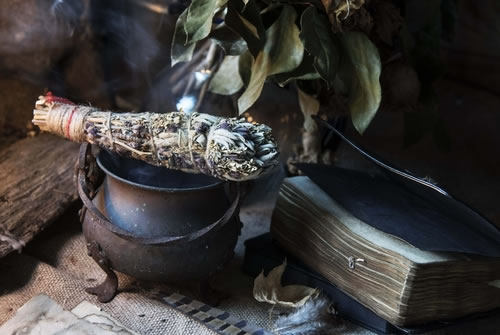
Wiccan Altar

What Is Wicca? A Gentle, Modern, Goddess-Centered Introduction for the Curious Witch

A soft, goddess-centered doorway into understanding Wicca and how it influences modern magic.

If you’re new here, begin with Witchcraft Explained: Foundations of Magic

Wicca has become one of the most visible and influential modern pagan paths — a nature-based, Goddess-honoring tradition that helped bring Goddess language, ritual structure, and nature-based spirituality into modern Western pagan practice. Even if you do not identify as Wiccan, you are likely already touched by its influence. Many popular forms of contemporary witchcraft share techniques that were popularized through Wiccan teaching—especially circles, elements, sabbats, and moon-based ritual timing.

But Wicca is more than its rituals.

It is a worldview that invites you to see the earth as alive, your intuition as sacred, ritual as poetry, and magic as a natural expression of your inner power. It offers a structured yet fluid way of relating to the divine, honoring the cycles of nature, and exploring your own spiritual sovereignty.

This article is not written to convert or convince.
It is written to illuminate.

To offer a soft, feminine, modern understanding of what Wicca is —
and how its wisdom continues to shape the magic we practice today.

Whether you are curious about Wicca, exploring witchcraft, deepening your connection to the Goddess, or seeking context for your magical path, this guide will help you understand:

  • what Wicca is (and isn’t)
  • how it developed
  • the beliefs and traditions within it
  • how Wiccan ritual structure shaped modern spellcasting
  • how Wicca supports intuitive, feminine spirituality
  • how to explore its practices safely and confidently

You do not need to be Wiccan to practice magic.
You do not need to join a coven to honor the Goddess.
You do not need rules to awaken intuition.

But understanding Wicca gives you a deeper sense of where the modern magical landscape came from — and how it can empower your own journey.


Understanding Wicca — A Modern Nature-Based Religion

Wicca is a contemporary pagan religion that took shape in the mid-20th century, with Gerald Gardner and Doreen Valiente among the most influential early figures. It’s modern in its organized form, yet it draws inspiration from older streams of European folklore, seasonal rites, ceremonial ritual structure, and broader earth-centered spirituality. Because Wicca is practiced in many different ways—traditional and eclectic, devotional and magical—there isn’t one single “standard” expression that fits everyone.

At its heart, Wicca is oriented around reverence: reverence for nature, for cyclical time, for sacred relationship, and for the idea that spiritual life is something you participate in—not just something you believe. Many Wiccans work with the Goddess and God (or a Goddess-centered approach), celebrate seasonal festivals, and use ritual as a way to mark change, set intention, and deepen connection with the natural world.

In Wicca, nature isn’t only scenery—it’s a living teacher. The turning of the seasons becomes a kind of spiritual calendar. The elements become a language for understanding life: Earth as stability and home, Air as mind and breath, Fire as will and transformation, Water as feeling and intuition. And for many, the moon becomes a rhythm that helps the inner world come back into alignment.


Wicca vs. Witchcraft — What’s the Difference?

A common misconception is that Wicca and witchcraft are the same thing—or that anyone who practices witchcraft must be Wiccan. In reality, they’re related for many people, but they are not interchangeable.

Witchcraft

Witchcraft is a practice: a craft, a set of skills, and a way of working with intention, symbolism, energy, and ritual. Some people approach it spiritually, some psychologically, some culturally, and some purely as personal practice. You can explore witchcraft with a religion, without a religion, or alongside another faith entirely.

Wicca

Wicca, on the other hand, is a religion. It has recognizable structures and traditions—often including seasonal celebrations, ritual forms, reverence for deity (commonly the Goddess and God, though practice varies), and an ethical orientation that guides how practitioners relate to power and harm.

Many Wiccans practice witchcraft, because ritual and magic are part of how Wicca is lived. But many witches are not Wiccan. And you don’t need a specific religious label to have a real practice.

Your intuition belongs to you.
Your practice can be chosen with care.
And your power is sovereign—built through clarity, consistency, and respect.

Wiccan Divine

The Wiccan View of the Divine — Goddess and God

Many Wiccan traditions honor the Divine through a complementary pair: the Goddess and the God. This is often described as a duality—not because spirituality must be split into two boxes, but because nature itself moves in rhythms that feel relational: waxing and waning, seed and harvest, light and dark, stillness and motion.

It’s also important to know that Wiccan language about deity is flexible. Some practitioners experience the Goddess and God as literal deities. Others experience them as archetypes, sacred forces, or symbolic “faces” of the same underlying mystery. Both approaches exist within modern Wicca, and neither is inherently more “real” than the other—what matters is how your relationship with the Divine actually functions in your life and practice.

The Goddess

The Goddess is commonly associated with the moon, the earth, the waters, and the cycles of life. Many Wiccans also work with the Triple Goddess—often expressed as Maiden, Mother, and Crone—representing phases of becoming, creating, and deepening into wisdom. (Different traditions interpret these aspects in different ways, so it’s best seen as a framework rather than a strict rule.)

The God

The God is often associated with the sun, vitality, the wild and instinctual life-force, the growing season, and the mysteries of death and rebirth as the year turns. In many Wiccan seasonal stories, the God’s cycle mirrors the land: emerging, ripening, fading, and returning.

Together, the Goddess and God symbolize balance and wholeness—a way of honoring how the sacred moves through the natural world and through us.

And if your practice is primarily Goddess-centered, that’s not “less Wiccan.” Many people are drawn to Wicca precisely because it makes room for reverence of the Feminine as Divine—without requiring you to divide your devotion evenly or follow someone else’s template. Your path is allowed to be personal, living, and true to what you genuinely feel.


The Wheel of the Year — Wicca’s Seasonal Celebrations

One of Wicca’s most influential gifts to modern witchcraft is the Wheel of the Year: eight seasonal festivals (sabbats) that track nature’s turning points and the inner shifts that often come with them. Even if you don’t identify as Wiccan, this calendar can be a powerful way to feel more grounded, connected, and spiritually “in season” with your own life.

The eight sabbats are commonly named as:

  • Yule — Winter Solstice: return of light, renewal, quiet beginnings
  • Imbolc — purification, inspiration, the first thaw of momentum
  • Ostara — Spring Equinox: balance, awakening, fresh growth
  • Beltane — fire festival: passion, vitality, fertility, creative life-force
  • Litha — Summer Solstice: sun at its peak, strength, celebration
  • Lammas / Lughnasadh — first harvest: gratitude, effort becoming real
  • Mabon — Autumn Equinox: balance, reflection, refinement
  • Samhain — ancestral veneration, endings, the “witches’ new year” in many modern traditions

Each sabbat reflects a simple spiritual truth: life moves in cycles. There are seasons to grow, seasons to bloom, seasons to harvest, and seasons to let go.

That’s why Wiccans—and many non-Wiccan witches—still work with these festivals: not as rigid obligations, but as rhythmic touchstones for ritual, reflection, and staying attuned to nature’s changing energy.


Esbats — Working With the Moon

In many Wiccan traditions, the moon is honored through Esbats—rituals or gatherings timed to the lunar cycle. Most commonly, Esbats are held on the full moon, though some practitioners also work with the new moon or other key phases depending on their tradition and intention.

The full moon is often chosen because it symbolizes fullness, illumination, and heightened visibility—emotionally, intuitively, and spiritually. In practice, it’s a natural time for work that benefits from clarity and charge, such as:

  • divination and intuitive listening
  • healing and restoration
  • energy work and spiritual alignment
  • spellwork for growth, success, attraction, and momentum
  • gratitude and devotional practice
  • releasing what has reached completion (And for release work specifically, many people also love the waning moon, since it mirrors reduction and letting-go.)

One reason lunar practice feels so widespread today is that Wiccan Esbat traditions helped normalize moon-based ritual timing in modern pagan spirituality. Over time, that influence spread—so now “moon work” is a familiar, accessible rhythm for many witches and spiritual practitioners, whether or not they identify as Wiccan.


Ethics in Wicca — The Wiccan Rede & Threefold Law

Ethics in Wicca — The Wiccan Rede and the Threefold Law
Wicca is often described as a path of personal responsibility. Rather than a long list of commandments, many Wiccans orient around a few core ethical ideas—simple on the surface, and surprisingly deep once you start living them.

The Wiccan Rede

One of the most widely quoted lines in Wicca is the Rede:

“An it harm none, do what ye will.”

A helpful way to understand it is this: it’s less a strict rule and more a guiding question—an invitation to act with awareness.

It encourages you to:

  • consider consequences (including unintended ones)
  • choose magic that supports healing, clarity, protection, and growth
  • avoid coercion, cruelty, and reckless spiritual “experiments”
  • treat free will and boundaries with respect

It’s also important to be honest about the phrase “harm none.” In real life, almost every decision affects someone. So in practice, many Wiccans interpret the Rede as: reduce harm where you can, act consciously, and take responsibility for what you set in motion.

That’s why the Rede can feel empowering instead of restrictive: it asks for maturity, not fear.

The Threefold Law

Another common teaching you’ll hear—especially in more popular or beginner-facing Wicca—is the Threefold Law, often described like this:

What you send out—positive or negative—returns to you magnified.

Some people understand this literally (as a spiritual law). Others see it as symbolic, pointing to a practical truth: energy has consequences, patterns repeat, and what you cultivate tends to shape what you experience over time—through relationships, mindset, choices, and the “tone” you carry into life.

Either way, the purpose of the teaching is usually the same: practice with integrity. Not because you’re being watched, but because the kind of energy you live in becomes the kind of life you build.


Types of Wicca: A Diverse Spiritual Landscape

Wicca isn’t a single, uniform tradition. It’s better understood as a family of related paths—some formal and initiatory, some solitary and self-directed, many shaped by culture, teachers, and personal theology. What unites them is usually a shared ritual framework, a nature-centered worldview, and a reverence for cycles (seasonal and lunar), even when the details differ.

Here are some of the most commonly discussed forms:

  • Gardnerian Wicca
    One of the earliest modern Wiccan traditions, typically coven-based and initiatory, with established rituals and training passed through lineage.
  • Alexandrian Wicca
    Also initiatory and coven-based, often described as more ceremonial in style, with structured ritual and a strong emphasis on tradition and practice.
  • Dianic Wicca
    A Goddess-centered approach that often focuses on the Divine Feminine and women’s mysteries. (Note: different Dianic groups vary widely in theology and inclusivity, so it’s worth reading carefully when exploring.)
  • Eclectic Wicca
    The most common modern approach: flexible, intuitive, and personalized, often blending Wiccan structure with other spiritual influences while keeping the heart of the path.
  • Solitary Wicca
    Wiccan practice outside a coven—structured or eclectic—shaped for those who practice alone by choice or circumstance, often with self-study and personal ritual.

Wicca has room for many voices and styles. The best fit is usually the one that helps you practice with clarity, consistency, and respect—not the one that demands you force yourself into someone else’s shape.


Wiccan Ritual Tools — Symbols of Power & Intent

In Wicca, tools aren’t required—your intention, presence, and ritual awareness matter most. But many practitioners love working with sacred objects because they give the mind and energy a clear focal point. Tools create structure, help you shift into ritual space, and make your intentions feel tangible.

Common Wiccan tools include:

  • Athame — a ritual blade used to direct energy (not for cutting physical materials).
  • Wand — a tool for guiding intention, blessing, and spellwork.
  • Chalice — often linked with water, emotion, receptivity, and sacred union in ritual.
  • Pentacle — a grounding symbol connected to Earth, protection, and elemental balance.
  • Cauldron — a symbol of transformation, release, and inner alchemy.
  • Candles — used for Fire, illumination, prayer, and timing within ritual.
  • Crystals — chosen for their symbolic “signature,” often used to support focus and amplification.
  • Herbs — used for cleansing, blessing, healing symbolism, and traditional correspondences.

These tools overlap beautifully with many forms of witchcraft outside Wicca. Think of them less as “required equipment” and more as ritual language—objects that help you shape space, concentrate attention, and practice with steadiness and respect.

Wiccan Belief

What Wiccans Believe About Magic

In Wicca, magic is typically understood as a natural spiritual practice—a way of working with intention, symbolism, and the rhythms of nature to help shape your inner state and the conditions around you.

Rather than “supernatural tricks,” Wiccan magic is often described as:

  • energy moved with purpose (attention + emotion + will)
  • intention made tangible through ritual, symbols, and action
  • partnership with nature and its cycles (moon, seasons, elements)
  • inner alignment that influences outer experience
  • a sacred act rooted in awareness, responsibility, and reverence

Many Wiccans would say: magic isn’t against nature—it’s part of nature, expressed through relationship, timing, and focused presence. That’s why Wiccan-style magic often overlaps smoothly with intuitive witchcraft, folk practice, and Goddess-centered spirituality.


How Wicca Influences Modern Spellcasting: Ritual, Intention, and Energetic Flow

Witchcraft can exist completely outside religion—but a lot of modern spellwork carries a quiet inheritance from Wiccan structure. Even practitioners who’ve never studied Wicca often use methods that were popularized through Wiccan ritual because they’re simple, repeatable, and effective at creating focus.

Wicca doesn’t “own” magic. But it helped many modern practitioners understand how to work with it.

Here are a few of the most common influences:

1) Intention as the Heart of Magic

Wiccan practice places strong emphasis on clear intention—not wishful thinking, but a steady inner direction. This became one of the most widespread principles in modern spellcasting: clarity creates coherence, and coherence creates power.

2) Sacred Space and the Idea of the Circle

Casting a circle is a classic Wiccan method for creating ritual boundary—a container where attention deepens and energy feels “held.” Even if someone doesn’t cast a formal circle today, the modern idea of “set the space, cleanse the space, protect the space” comes directly from this mindset.

3) Working with the Elements

Earth, Air, Fire, and Water became a widely used spellwork framework through modern Wiccan teaching. That’s why you’ll see elemental correspondences everywhere—even outside Wicca:

  • herbs, salt, stones (Earth)
  • incense, breath, words (Air)
  • candles, flame, action (Fire)
  • water bowls, oils, emotional work (Water)
  • and often Spirit as the fifth principle: unity, the sacred, the guiding thread

Different traditions map these differently, but the idea of elemental balance is now woven into most modern spellcraft.

4) Timing with Natural Cycles

Wicca helped popularize timing spellwork with:

  • moon phases
  • seasonal festivals (sabbats)
  • sunrise/sunset energy
  • and sometimes planetary days/hours

This is why “moon magic” and seasonal alignment became mainstream in modern witchcraft spaces.

5) Ethical Awareness and Responsibility

Wiccan ethics (like the Rede and, in some paths, the Threefold Law) influenced modern discussions about consent, consequence, and responsibility. Even witches who don’t share Wiccan theology often keep the core principle: practice with awareness—don’t outsource your ethics.

6) Ritual Structure that Supports Results

A lot of modern spell formats mirror a Wiccan-style flow because it naturally supports focus and completion:

  • ground + center
  • cleanse / set the space
  • name the intention
  • raise energy (breath, chant, movement, focus)
  • direct the energy
  • close + ground again

Professional spellcasting often builds on these same fundamentals—especially timing, ritual flow, energetic containment, elemental balance, and intention clarity—because those are the mechanics that keep a working clean, steady, and repeatable.

Modern Wiccan Goddess

Wicca and the Modern Goddess Witch: An Intuitive, Feminine Lens

Wicca is wonderfully diverse—but many people are drawn to it because it offers a devotional current that feels feminine in the energetic sense: receptive, intuitive, creative, cyclical, fluid, and embodied. This isn’t about who you are by gender. It’s about how a spiritual path meets you—through relationship, rhythm, and inner knowing.

That’s why many modern witches feel at home with Wicca even if they never join a coven or adopt the label.

Wicca helped reawaken the Goddess in modern spirituality

For many seekers in the West, Wicca was one of the first mainstream spiritual paths to openly honor the Sacred Feminine—not as an abstract concept, but as a living presence: in the moon, in the earth, in the tides, in transformation. Some traditions speak of Maiden/Mother/Crone, others use different names—but the deeper point is the same: divinity can be experienced as nurturing, wild, wise, and cyclical.

For many people, that felt like spirituality becoming a mirror instead of a cage.

Intuition becomes a form of spiritual authority

Wicca tends to encourage direct experience: noticing your dreams, your instincts, your inner “yes” and “no,” your relationship with symbols, seasons, and ritual. That emphasis pairs naturally with Goddess-centered witchcraft, where sovereignty matters and spiritual connection isn’t something you outsource.

It’s less “believe this” and more “practice, observe, and learn what is true for you.”

A cyclical worldview that honors real human life

Wicca’s seasonal wheel (and its moon-centered rhythm) helps many practitioners reframe life as cycles, not constant linear achievement. Growth has seasons. Healing has seasons. Desire has seasons. Rest has seasons. That view can feel deeply supportive—especially for people who’ve been taught that slowing down means something is wrong.

In a cyclical worldview, nothing is “behind.” It’s simply in its phase.

Ritual as embodiment, not obedience

At its best, Wiccan ritual isn’t about rigid performance—it’s about presence. The body becomes part of devotion. The senses become part of prayer. Meaning is felt, not enforced.

Many modern Goddess witches resonate with that: ritual as poetry, ritual as relationship, ritual as a way to return to the sacred without needing hierarchy to grant permission.

Personal power as a sacred flame

One of the most empowering undercurrents in modern Wicca is the idea that the sacred is not only “out there”—it’s also within you. Your awareness matters. Your choices matter. Your intention matters. Your spiritual life is something you participate in, not something done “to” you.

That’s a core theme in Goddess-centered witchcraft too: devotion and sovereignty can coexist.

Why this matters for today’s witches

Many modern seekers aren’t looking for a strict religion. They’re looking for something steadier and more nourishing:

  • empowerment without aggression
  • healing without shame
  • connection without control
  • intuition without ridicule
  • spirituality that feels embodied and real

Approached gently, Wicca can offer a lens, not a label. A framework, not a rulebook. A spiritual language many witches already speak—sometimes without even realizing where it began.


A Simple Wiccan-Inspired Ritual for Beginners

This is a gentle ritual inspired by Wiccan tradition—made for beginners who want something real, not rigid. You’re not trying to “do it perfectly.” You’re creating a clean moment of presence, devotion, and intention.

Purpose

To settle your energy, honor nature, and align with one clear intention.

What you’ll need

  • One candle (white for clarity, green for growth—either is perfect)
  • A small bowl of water
  • A pinch of salt
  • One natural object (stone, leaf, shell, crystal—something that feels calm and true)

The ritual

Arrive and make the space sacred

Sit down. Let your body be supported. Take three slow breaths and feel yourself land in the moment. Now imagine a soft boundary of light around you—close enough to hold you, gentle enough to breathe.

Say (optional): “Only what supports my well-being may enter. This space is sacred.”

Light the candle (clarity)

Light it slowly. Watch the flame steady.

Say: “I welcome light, clarity, and guidance.”

Touch the water (feeling and intuition)

Dip two fingertips into the bowl, or rest your hand beside it.

Say: “I honor the waters of intuition, healing, and honest feeling.”

Touch the salt (grounding and clean boundaries)

Hold the salt for a breath—small, simple, powerful.

Say: “I bless this space with protection, steadiness, and clean boundaries.”

Hold your natural object (the living world)

Feel its texture. Its weight. Its reality.

Say: “I honor the Earth, the turning seasons, and the sacred in all things.”

Speak your intention (one clean sentence)

Keep it short. No pleading. No bargaining.

Examples:
“I align with peaceful clarity and steady protection.”
“I call in supportive love and honest communication.”
“I release what drains me and return to what strengthens me.”

Then pause for 10–20 seconds. Let the words settle.

Close softly

Place the object down. Take one last slow breath.

Say: “The circle opens. The blessing remains.”

Snuff the candle, or let it burn safely for a few minutes while you sit in the calm.


Is Wicca Right for You?

Wicca isn’t the only path—and it’s not required to practice magic. But many people love it because it offers structure without harshness: seasonal rhythm, nature devotion, ritual as presence, and ethics that encourage self-responsibility.

If you feel drawn to the moon, the earth, cycles, devotion, and the quiet power of intention, Wicca may feel like home—even if you walk it in your own way.

If you want a gentle, ethics-first approach to spellwork, continue with What Is White Magic?


A Closing Whisper of Understanding

Wicca is a tradition—but it’s also an invitation.

An invitation to return to nature.
To honor the cycles of your own becoming.
To recognize the sacred in seasons, in endings, in beginnings, and in the living world within you.

You don’t need a title or a label to be real. Your intuition belongs to you. Your practice is allowed to evolve.

Whether you identify as Wiccan, eclectic, solitary, Goddess-centered, or simply curious, the heart of this path points to something steady:

Your magic is not a mistake.
Your intuition is not a weakness.
Your rhythm is sacred.
Your path is allowed to be fluid.
You are sovereign in your spirituality.

May you take what resonates.
May you leave what doesn’t.
May you trust the quiet pull toward what is true.

Blessed be.


Educational Disclaimer: This article is shared for spiritual education and personal reflection. It isn’t medical, mental-health, legal, or financial advice.

Last Updated on January 23, 2026 by Abigail Adams

Leave a Reply