
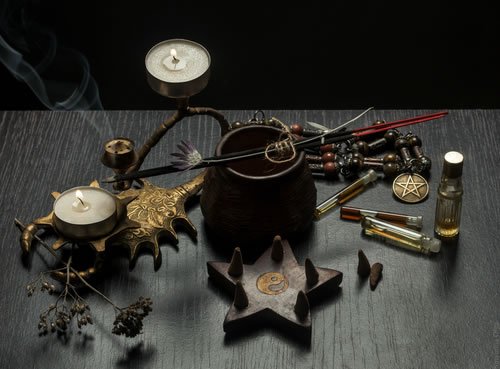
Honoring the Goddess: A Guide to Creating Altars for Beginners and Devotees Alike
The Altar as a Threshold Between Worlds
An altar is more than a table, a shelf, or a clearing in your home.
It is a threshold — the place where the everyday dissolves and the sacred rises to meet you.
To create an altar is to whisper to the universe:
“I am ready.”
Ready to connect with the Divine Feminine.
Ready to welcome her wisdom.
Ready to awaken the deep, intuitive parts of yourself that already know how to speak her language.
Whether you are brand-new to goddess work or returning to a long-forgotten lineage, altars act as a bridge—simple enough for beginners, powerful enough for priestesses. You do not need elaborate tools, rare herbs, or complicated rituals. You simply need openness, sincerity, and the willingness to create a small sanctuary where the sacred can breathe.
The Goddess does not ask for perfection.
She asks for presence.
How Goddess Altars Work
A goddess altar is a dedicated space where your energy and the energy of the deity meet.
It acts as:
- A focal point for intention
- A home for offerings
- A portal for meditation and ritual
- A symbolic invitation to the Goddess you choose to honor
Think of it as a lighthouse:
Your altar shines upward, and the Goddess shines back.
Goddess energy responds to:
- Consistency (not perfection)
- Authenticity
- Respectful intention
- Emotional truth
- Offerings given with gratitude
- Space made with devotion, even if small
When you activate an altar through attention—lighting a candle, speaking a chant, touching an object—it becomes energetically alive. Over time, it becomes a well of spiritual power you can draw from: confidence, healing, clarity, abundance, love, peace, protection, courage, and transformation.
If You Are New — You Belong Here
Many who come to the Goddess worry:
“What if I do it wrong?”
“What if I’m not experienced enough?”
“What if she doesn’t hear me?”
“What if I’m not worthy?”
The Divine Feminine does not measure worthiness.
She meets you exactly where you are.
You do not need ancient knowledge or a perfect lineage.
The Goddess has been calling women back to themselves for thousands of years — through intuition, desire, symbols, dreams, synchronicities. If you feel drawn to her, that feeling is already a sign of her presence.
Your altar can be:
- A nightstand
- A windowsill
- A corner of your desk
- A small shelf
- A travel pouch
- A full sacred room
- A hidden altar inside a drawer
- Or a single candle placed with intention
There is no wrong way to honor the Goddess if you approach with respect, honesty, and an open heart.
Being Respectful in Goddess Work
Respect does not come from perfection.
It comes from:
- Learning who the Goddess is
- Understanding her origin and domain
- Making offerings she traditionally enjoys
- Approaching with sincerity, not demand
- Never speaking to a deity with entitlement
- Being willing to listen, not just ask
- Honoring her through your actions, not just your altar
The Goddess is not a vending machine for miracles.
She is a partner, a mentor, a guide, an ancient force of nature responding to your devotion and integrity.
You honor her through:
✨ Consistency — a few minutes dedicated often
✨ Gratitude — always thanking before requesting
✨ Alignment — living in a way that reflects your intentions
✨ Care — keeping your altar clean and refreshed
✨ Offerings — symbolic gifts that carry meaning
Respect creates resonance.
Resonance creates results.
How to Create Your Altar — Step by Step
1. Choose Your Space
Pick a place where you feel calm, undisturbed, and connected. This can be tiny or grand — the size does not matter. What matters is that the space is intentional.
2. Cleanse the Area
You can use:
- Smoke (sage, rosemary, incense)
- Sound (bells, chimes)
- Water (rose water, moon water)
- Energy (visualizing light cleansing the area)
This clears stagnant energy and prepares the space to receive divine presence.
3. Place Your Anchor Object
This is the item that represents the Goddess.
It can be:
- A statue
- A candle
- A picture or artwork
- A symbol associated with her (owl for Athena, sun for Amaterasu, etc.)
- A stone or flower connected to her energy
Your anchor object becomes the heart of your altar.
4. Add Elements
Most altars carry the four elements, but they are optional:
- Fire: candles
- Water: bowl of water, shells
- Earth: crystals, stones, salt
- Air: incense, feathers
These bring balance and help ground divine energy.
5. Add Offerings
Offerings can be temporary or permanent.
They are gestures of gratitude and devotion—not payment, not sacrifice.
6. Add Your Intention
Speak it.
Write it.
Whisper it.
Feel it.
Your intention activates the altar.
7. Visit Your Altar Regularly
Even a few minutes a day forms a relationship.
Spend time:
- Meditating
- Lighting candles
- Speaking prayers
- Leaving offerings
- Journaling
- Chanting
- Feeling connected
8. Refresh the Energy
Remove offerings once they wilt or complete their purpose.
Wipe the surface.
Re-light new candles.
Update intentions.
The altar is a living space — and you are its caretaker.
How to Work With Goddess Energy
When you stand before your altar, imagine:
- The Goddess rising through your breath
- Her energy filling your hands
- Her wisdom surrounding your aura
- Her voice echoing through your intuition
- Her presence awakening through your spine and heart
Working with goddess energy is a relationship, not a transaction.
Here’s how to strengthen it:
1. Speak to Her
Talk as if you were speaking to a trusted elder, a divine mentor, a cosmic mother.
Speak your truth.
Speak your fears.
Speak your desires.
2. Listen for Guidance
Goddess guidance appears through:
- Synchronicities
- Dreams
- Sudden clarity
- Intuition
- Emotional shifts
- Symbols
- Nature signs
- Repeating numbers
- Encounters with animals or elements
She speaks through energy, not only through words.
3. Embody Her Traits
If you honor:
- Athena — embody wisdom, strategy, courage
- Oshun — embody sensuality, sweetness, self-worth
- Sekhmet — embody strength and righteous fire
- Quan Yin — embody compassion and softness
- Diana — embody independence and freedom
When you live in alignment with her qualities, you deepen the connection.
4. Don’t Doubt Your Ability
Every priestess was once a beginner.
Every beginner is already a spark of the divine.
Goddess energy responds to authenticity—not expertise.
30 Goddesses, Their Domains & Offerings
Below is a curated list of thirty goddesses from different cultures. These descriptions are written in your inspirational, empowering, goddess-style voice, tailored for your clients to feel confident and uplifted as they choose who to work with.
Athena — Wisdom, Strategy, Protection
Offerings: olive oil, incense, feathers, written intentions, bay leaves
Aphrodite — Love, Beauty, Desire
Offerings: roses, honey, seashells, pink candles, perfume
Hekate — Magic, Crossroads, Shadow Work
Offerings: keys, garlic, black candles, moon water, incense
Diana / Artemis — Freedom, Wildness, Moon, Protection
Offerings: fresh water, herbs, pine, white candles, forest or animal symbols
Persephone — Transformation, Renewal, Underworld Wisdom
Offerings: pomegranate seeds, dark flowers, candles, obsidian or garnet
Demeter — Harvest, Nourishment, Home
Offerings: grains, bread, herbs, green candles, fresh fruit
Isis — Magic, Motherhood, Healing, Sacred Feminine Power
Offerings: lotus flowers, milk, candles, lapis lazuli, handwritten prayers
Hathor — Joy, Music, Femininity, Celebration
Offerings: music, sweets, wine, dancing, flowers
Sekhmet — Strength, Courage, Protection, Fire
Offerings: spicy foods, red candles, carnelian, fiery spoken prayers
Bastet — Home, Cats, Protection, Sensuality
Offerings: cat imagery, incense, soft music, flowers
Nuit — Cosmic Creation, Stars, Infinite Possibility
Offerings: star symbols, deep blue candles, night water, celestial items
Cerridwyn — Inspiration, Transformation, Knowledge
Offerings: cauldron imagery, herbs, poetry, seeds, moon water
Brigid — Healing, Fire, Creativity
Offerings: candles, poetry, bread, fresh water, white flowers
Freya — Love, Warriorship, Magic, Beauty
Offerings: amber, honey, roses, mead, gold-colored items
Frigg — Marriage, Protection, Home
Offerings: woven items, candles, milk, gentle herbs
Hel — Ancestral Wisdom, Shadow, Boundaries
Offerings: black stones, candles, respectful silence, dark flowers
Eos — Dawn, New Beginnings, Radiance
Offerings: sunrise water, gold candles, fresh flowers
Gaia — Earth, Stability, Motherhood, Nature
Offerings: soil, plants, seeds, eco-friendly acts, grounding rituals
Rhiannon — Sovereignty, Enchantment, Mystery
Offerings: horse symbols, music, feathers, moonlit prayers
Oya — Storms, Change, Ancestors, Rebirth
Offerings: purple cloth, wind bells, dark wine, strong incense
Yemaya — Oceans, Motherhood, Nurturing
Offerings: shells, blue candles, seawater, white flowers
Oshun — Love, Sensuality, Wealth, Sweetness
Offerings: honey, cinnamon, oranges, gold items, mirrors
Erzulie Freda — Love, Luxury, Femininity, Romance
Offerings: perfumes, jewelry, pink candles, sweets
Amaterasu — Sun, Light, Hope, Radiance
Offerings: gold candles, mirrors, sunlight, rice
Quan Yin — Compassion, Mercy, Healing
Offerings: lotus flowers, water, incense, soft music, acts of kindness
Lakshmi — Wealth, Fortune, Beauty, Prosperity
Offerings: coins, lotus flowers, sweets, rice, cinnamon
Parvati — Devotion, Inner Strength, Divine Union
Offerings: incense, flowers, milk, meditation, mantras
Durga — Power, Protection, Victory
Offerings: red cloth, candles, incense, courageous actions
Kali — Liberation, Shadow Work, Fierce Transformation
Offerings: red flowers, dark candles, raw truth, surrender
Asherah — Ancient Mother Goddess, Fertility, Sovereignty
Offerings: trees, branches, wine, honey, sacred carvings
How to Know Which Goddess Is Calling You
Many beginners ask:
“Which goddess should I choose?”
The truth is simple:
The Goddess chooses you through your desire.
If you feel drawn to:
- Strength → Sekhmet or Durga may be calling.
- Love → Aphrodite, Oshun, or Erzulie.
- Wisdom → Athena or Isis.
- Transformation → Persephone or Kali.
- Protection → Hekate or Diana.
- Healing → Quan Yin or Brigid.
- Abundance → Lakshmi or Oshun.
Your desire itself is a divine message.
Follow the pull.
It knows the way.
What to Say at Your Altar
You can speak freely, but here is a simple invocation many clients love:
“Goddess of light,
Goddess of truth,
Goddess who walks beside me,
I honor you today.
Guide me, strengthen me, and open the path before me.
I offer this gift with gratitude.
Bless my home, my heart, and my intentions.”
Feel your words.
The Goddess feels you.
How to Open to Goddess Energy
When standing before your altar:
- Breathe deeply.
- Visualize a warm, luminous light around you.
- Imagine the Goddess standing behind you, above you, or within you.
- Let her fill your energy field.
- Speak your intention out loud.
- Thank her for her presence.
Your energy becomes her energy.
Her strength becomes your strength.
Empowerment Through Devotion
Working with a goddess is not about worshiping a distant deity.
It is about remembering who you are.
You are not separate from the divine feminine.
You are its embodiment.
Your altar becomes a mirror reminding you:
- You are powerful
- You are worthy
- You are intuitive
- You are guided
- You are supported
- You are sacred
- You are whole
When you honor the Goddess, you awaken the goddess within you.
Closing: You Are Ready
No matter how new you are, no matter how uncertain you feel — you are ready.
Start small.
Be sincere.
Let your altar grow with you.
The Goddess does not expect perfection.
She expects presence.
She expects devotion.
She expects truth.
When you create an altar, you create a doorway.
When you honor a goddess, you honor your own emerging power.
And when you walk this path with an open heart, the universe opens with you.
The Goddess is already here.
Now step forward and meet her.
Last Updated on December 26, 2025 by Abigail Adams



Leave a Reply