
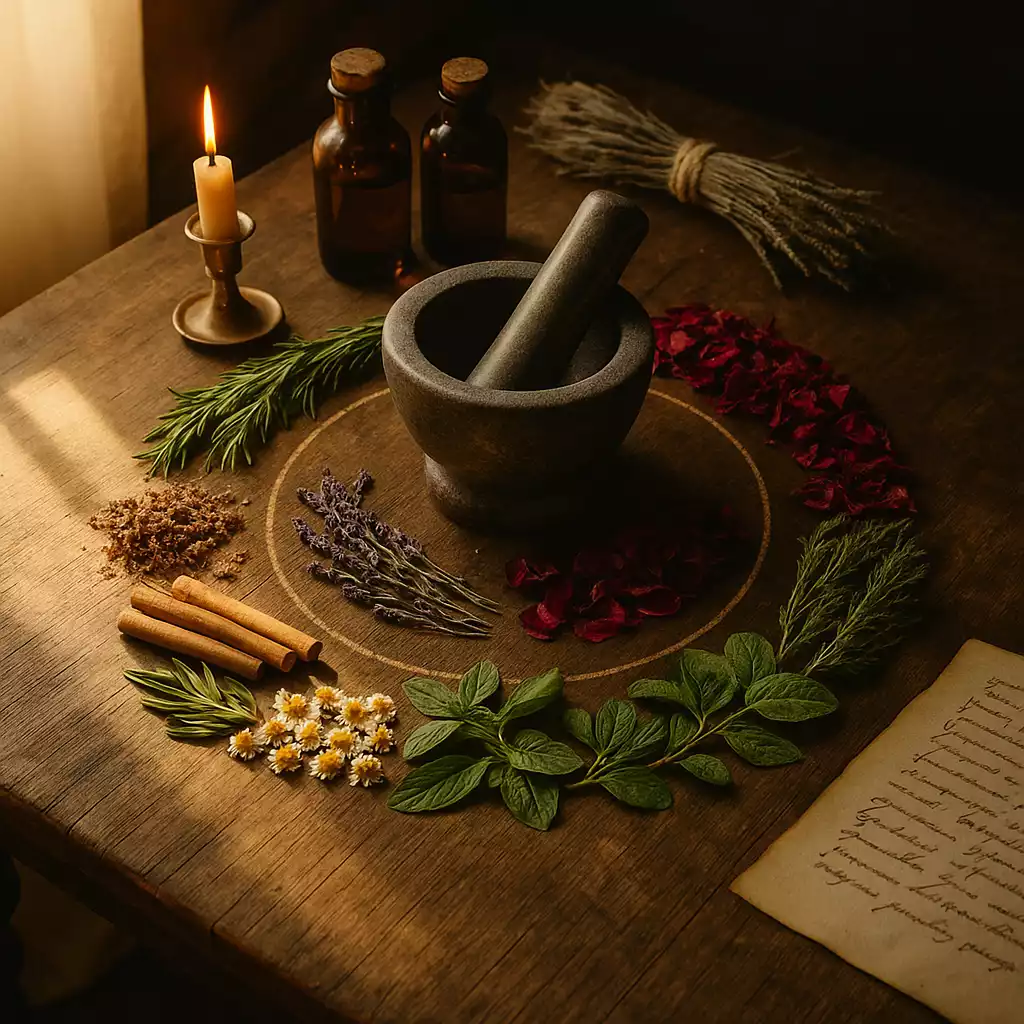
Herbs & Magic: The Complete Goddess Guide to Sacred Herbal Wisdom
Table of Contents
Introduction — The Living Magic of Herbs
There is a moment in every seeker’s journey when the world begins to shimmer again.
A sprig of rosemary on the counter suddenly feels like an ancestor’s whisper.
A cup of chamomile tea becomes a small sun held between your palms.
A flicker of candlelight turns dried lavender into a violet-gold offering.
Herbs have always lived in this space — between the mundane and the mystical, the physical and the divine. They are the oldest protectors of the body, the earliest tools of the healer, and the quiet companions of the witch. For thousands of years, women, priestesses, and wise ones turned to plants not only for medicine but for meaning: protection, love, clarity, intuition, grounding, courage, and connection.
Even now, when the world feels loud and fast, that ancient language has not disappeared.
It waits patiently in your kitchen drawers, garden beds, glass jars, and shadowed apothecary shelves. It hums softly in mint leaves, curls through smoke from burning sage, and rests inside every enchanted tea blend.
This guide is your doorway back into that world.
If you’re new here, begin with Witchcraft Explained: Foundations of Magic
Here, we walk through the foundations of herbal practice in a way that feels feminine, intuitive, and deeply empowering. You will learn how herbs are prepared, how they carry energy, how to work with them magically and medicinally, and how to recognize their stories and strengths.
Most importantly, you will be reminded of something your soul already knows:
Herbs are alive.
They respond to intention, ritual, breath, and devotion.
They are medicine for the body — and portals for the spirit.
Let us begin where all witches begin: with the sacred forms of herbal preparation.
Forms of Herbal Remedies — How Witches Prepare Plant Magic
Herbalism has always been a craft of transformation.
A leaf becomes a healing tea.
A root becomes a strong tincture.
A flower becomes an oil, perfume, or charm.
A handful of herbs becomes a spell.
Each form of preparation awakens a different part of the plant — its fragrance, its flavor, its medicinal essence, or its magical energy. Understanding these forms is the foundation of herbal magic. Once you know how to prepare herbs properly, your spells become sharper, your healing blends become stronger, and your intuition begins to bloom.
Below are the most important forms of herbal remedies — written in a way that honors both their earthly and magical qualities.
Herbal Infusions — Warm Medicine, Warm Magic
An infusion is the simplest, most beloved form of herbal preparation.
It is essentially a strong tea, created by soaking leaves or flowers in hot water.
Infusions are used to:
- soothe the nervous system
- calm the heart
- invite emotional clarity
- release anxiety
- prepare the mind for ritual or meditation
In magic, infusions carry intention beautifully.
You can pour them into ritual baths, use them to cleanse tools, or anoint doorways and altars. Every sip becomes a blessing.
Common herbs: chamomile, peppermint, rose, lavender, lemon balm.
Decoctions — Drawing Power From Roots and Bark
A decoction is used when working with tougher plant materials such as roots, bark, seeds, and woody stems. Instead of steeping, these herbs are simmered gently to draw out their deeper essence.
Decoctions are excellent for:
- grounding magic
- protection work
- strengthening the body
- shadow-work rituals
- ancestral connection
Because the preparation is slow and intentional, decoctions carry a deep, earthy energy ideal for spells that require stability, endurance, and inner strength.
Common herbs: ginger root, dandelion root, cinnamon bark, licorice root.
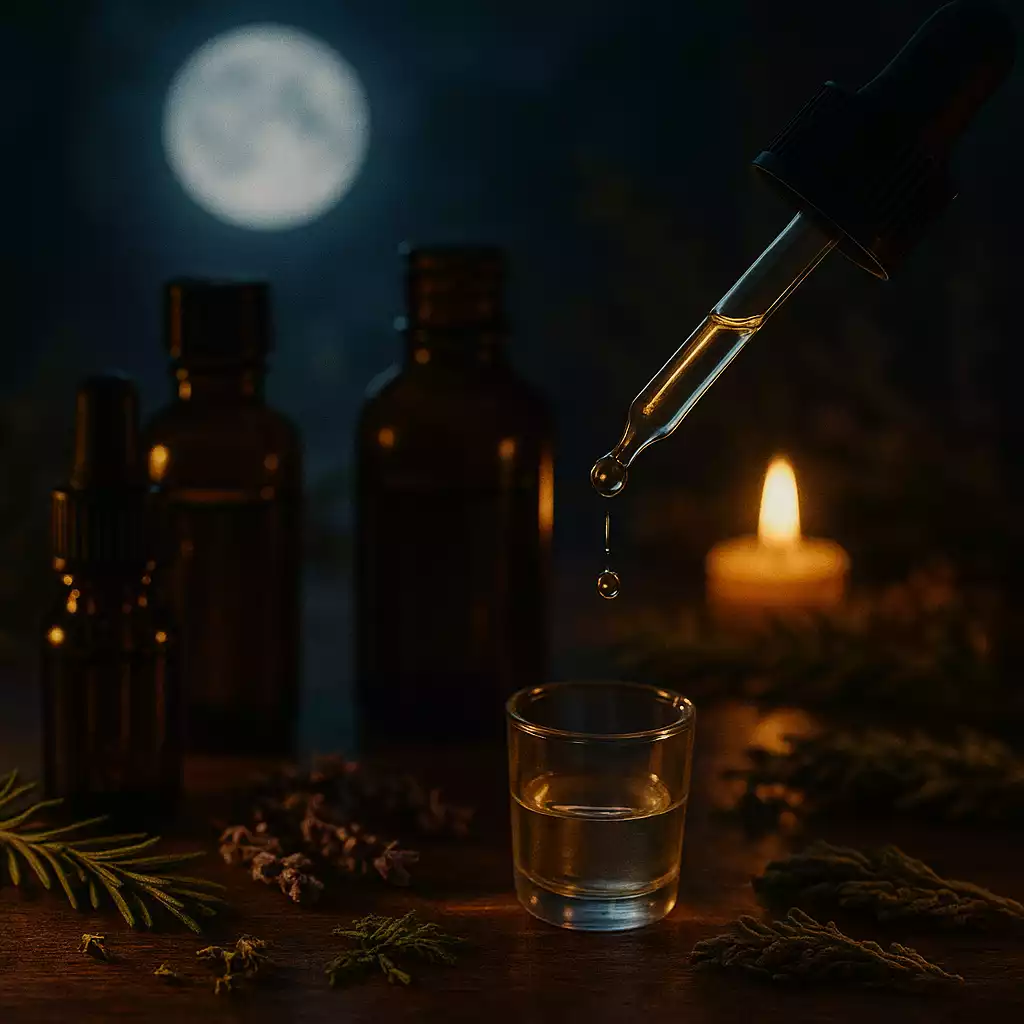
Tinctures — Concentrated Drops of Power
Tinctures are potent liquid extracts made by steeping herbs in alcohol or glycerin.
They are long-lasting, shelf-stable, and highly concentrated.
Witches love tinctures because they:
- capture a plant’s full essence
- require only a few drops
- integrate easily into rituals
- are discreet and powerful magical allies
Tinctures can be added to teas, used to anoint candles, rubbed onto pulse points, or placed on the tongue before ritual to shift your energy quickly.
Common herbs: valerian, echinacea, hawthorn, elderberry.
Herbal Oils — Magic That Moves Through the Skin
Herbal oils are created by infusing herbs into a carrier oil (such as olive, jojoba, or sweet almond). The result is sensual, aromatic, and incredibly versatile.
They are used for:
- anointing the body before ritual
- blessing candles
- massage and healing
- creating spell oils
- crafting perfumes
- softening the heart and balancing the aura
Oil infusions are especially powerful for love spells, beauty magic, and Goddess-centered rituals because they move through the skin — the boundary between inner and outer worlds.
Common herbs: rose, calendula, mugwort, jasmine.

Salves and Balms — Earth Medicine Made Tangible
A salve is created by blending infused oil with beeswax, creating a thick, soothing balm.
Salves are used to:
- protect
- seal
- soften
- restore
- comfort
Magically, salves symbolize closing the wound, sealing the spell, or marking the body with intention. They are wonderful for self-blessing rituals and for grounding after intense spiritual work.
Common herbs: comfrey, plantain, lavender, eucalyptus.
Syrups — Sweet Healing, Sweet Magic
Herbal syrups are made by combining strong herbal decoctions with honey or sugar. They feel nurturing, soft, motherly — like something given by a wise grandmother.
Syrups are used to:
- soothe the throat
- warm the chest
- comfort the spirit
- calm emotional storms
- support the immune system
In magic, syrups are connected to sweetness, persuasion, communication, and emotional healing.
Common herbs: elderberry, thyme, ginger.
Powders — A Witch’s Secret Weapon
When herbs are dried and ground into fine powder, they become incredibly versatile.
They can be:
- blown into sacred space
- sprinkled in charm bags or spell jars
- mixed into candle dressings
- added to incense blends
- pressed into amulets
Powders work fast and are easy to conceal, making them historically popular among witches who needed to practice discreetly.
Common herbs: cinnamon, garlic, rosemary, turmeric.
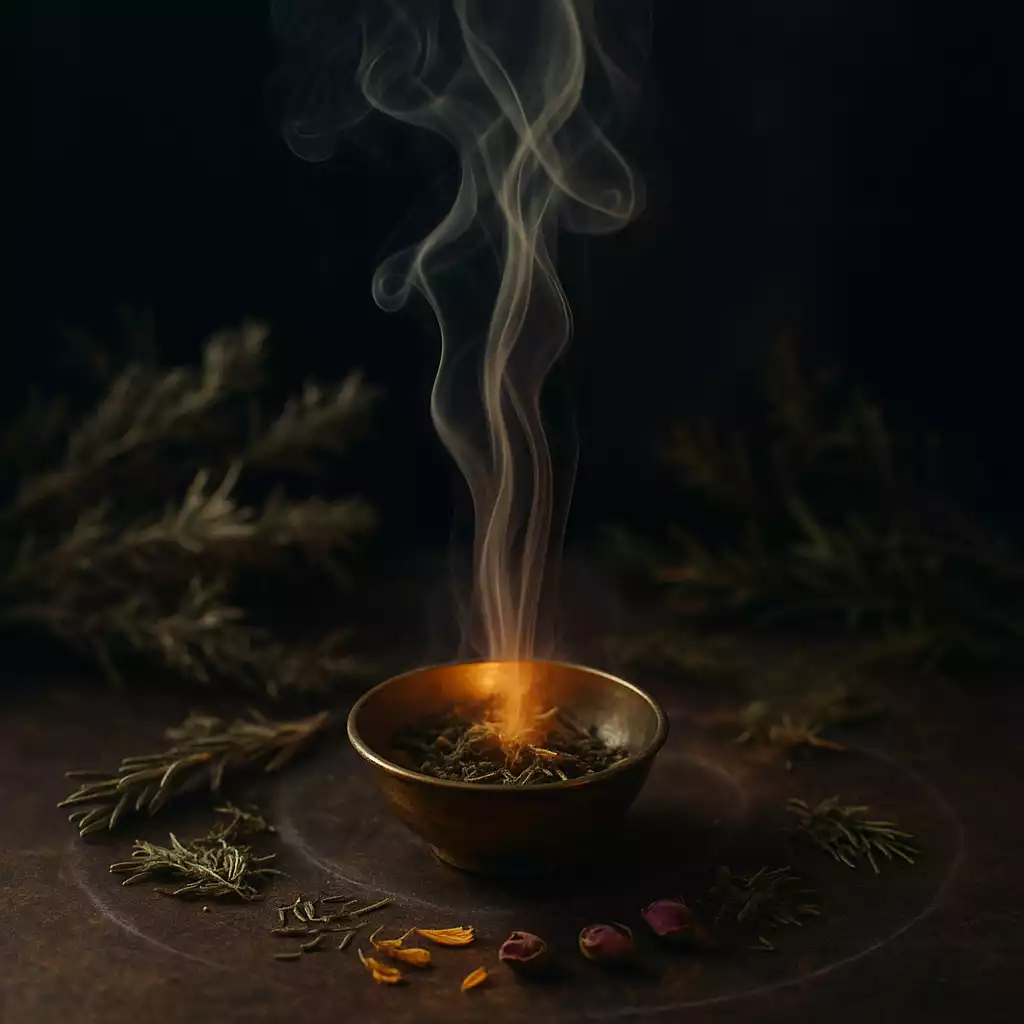
Magical Herbal Smoke — Cleansing, Opening, Transforming
Burning herbs (as incense, bundles, or loose leaf) changes their energy into something ethereal. Smoke lifts prayers, clears stagnant energy, and creates ritual space.
Herbal smoke is used for:
- purification
- banishing
- opening psychic perception
- calling in ancestors
- setting the tone for ritual
It is one of the oldest forms of magic on earth.
Common herbs: sage, cedar, mugwort, frankincense, rosemary.
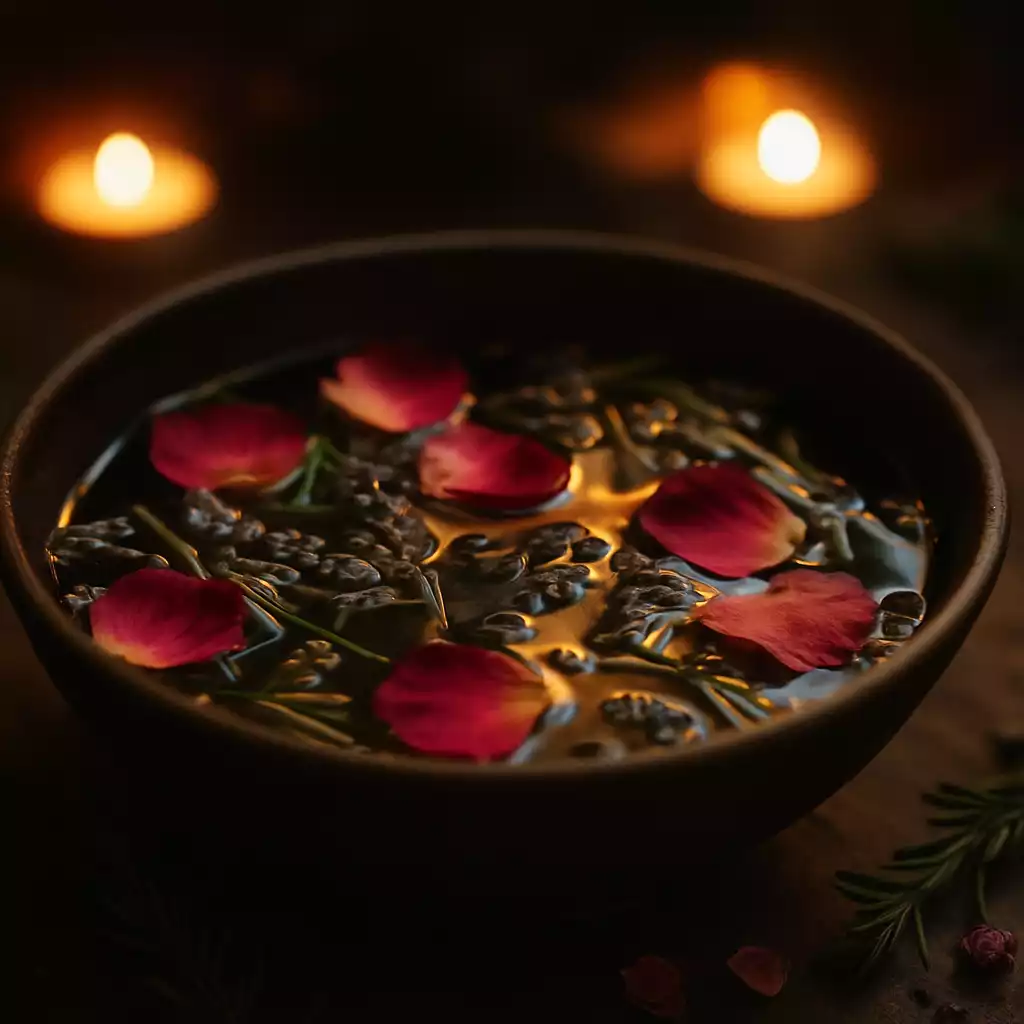
Baths and Washes — Full-Body Alchemy
Water is the element of emotion, intuition, and deep healing.
When herbs meet water, magic enters the body through the skin, breath, and aura.
Herbal baths and washes are used for:
- self-love
- cleansing
- attraction
- confidence
- protection
- relaxation
- ritual preparation
A bath is often considered a spell by itself — the water becomes your cauldron.
Common herbs: rose petals, lavender, chamomile, rosemary, hyssop.
Spell Sachets, Jars, and Charm Bags — Carriers of Intention
Herbs placed in small pouches or jars continue working over time.
They hold intention, absorb energy, and amplify spells quietly but continuously.
Used for:
- love
- abundance
- protection
- sleep
- banishing
- luck
- new beginnings
These are perfect for beginners and seasoned witches alike because they are simple yet endlessly powerful.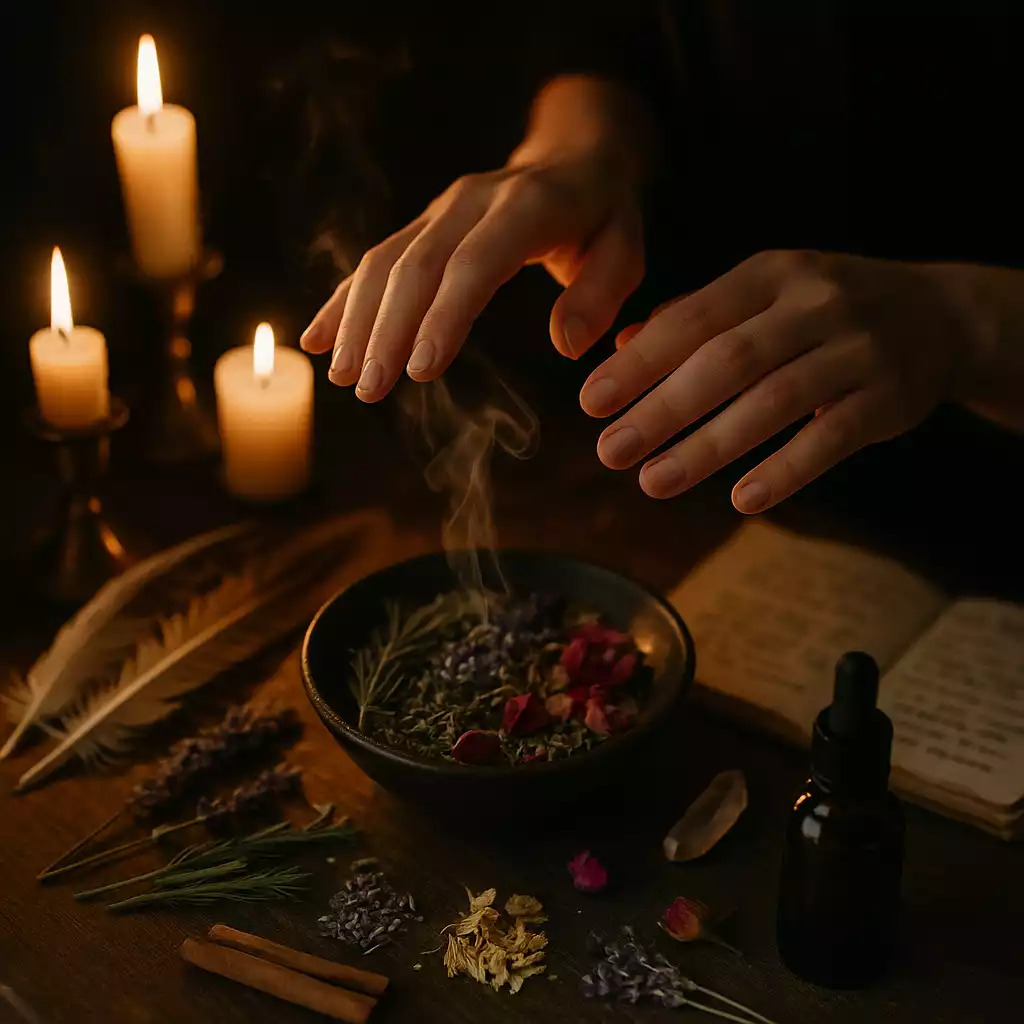
Herbs in Magical Practice — Working With the Spirit of the Plant
Magic with herbs is one of the oldest sacred arts. It is intuitive, feminine, ancestral, and deeply relational. When you work with herbs, you are not simply handling physical matter — you are engaging with the energetic signature, spirit, and memory each plant carries.
Herbs are more than tools. They are allies.
They hold archetypal qualities — courage, softness, protection, sensuality, clarity — and when you invite them into ritual, they mirror those qualities back to you. Magic becomes a conversation: your intention in one hand, the plant’s nature in the other.
Herbs Carry Energetic Correspondences
Every herb has a natural “direction” of energy. Some lift, some soothe, some protect, some cleanse, some ignite passion. Witches choose herbs based on these correspondences:
- Rose — love, beauty, softness
- Mugwort — intuition, psychic opening
- Lavender — peace, purification, calming the aura
- Basil — prosperity, attraction, abundance
- Patchouli — grounding, manifestation, sensuality
- Thyme — courage, strength
- Sage — cleansing, clearing old energy
These correspondences come from centuries of observation and magical practice — layer upon layer of story, folklore, and experience. When you work with a plant, you become part of that lineage.
Intention Is the First Ingredient
Before touching any herb, pause.
Feel your breath settle.
Place your hands around the bundle, jar, or bowl.
Let your heart speak the reason you reached for this plant.
Herbs respond to clarity.
When your intention is steady, their energy meets it and magnifies it. If your mind is scattered, the magic diffuses.
A simple rule:
Your energy sets the direction.
The herb provides the fuel.
The Ritual of Preparation
Preparing herbs is a spiritual act — not mechanical, not rushed.
Even the simplest step becomes ritual when done consciously:
- Crushing herbs with your fingers becomes grounding
- Stirring clockwise becomes attraction
- Stirring counterclockwise becomes release
- Pouring hot water becomes activation
- Straining the herbs becomes purification
This is why witches love herbal magic: it is embodied.
You feel it, smell it, touch it, breathe it.
Herbs in Candle Magic
One of the most powerful combinations in witchcraft is herbs + candle flame. The flame awakens herb energy quickly, sending intention upward into spiritual realms.
Herbs can be:
- sprinkled around the base of a candle
- rolled onto a candle with oil
- burned as incense alongside the flame
Every herb modifies the spell:
- cinnamon speeds it
- rosemary clarifies it
- rose attracts love
- mint opens pathways
- mugwort deepens psychic power
The flame amplifies whatever you place before it.
Charm Bags, Spell Jars & Talismanic Magic
Herbs love to work quietly over time.
Placed inside jars, sachets, or talismans, they continue shifting energy day after day.
A charm bag for protection might include:
- rosemary
- bay leaf
- cedar
- black salt
A charm bag for love might include:
- rose petals
- jasmine
- cinnamon
- lavender
These are perfect for women building daily spiritual practice — they are intimate, portable, and very effective.
Offering Herbs to Spirits, Ancestors, and the Goddess
Herbs bridge the human and the sacred.
Offerings may include:
- rose petals for the Divine Feminine
- mugwort for the Goddess of prophecy
- lavender for peace and healing
- rosemary for ancestors
- tobacco or cedar in respect for Indigenous traditions
When you offer herbs, you offer time, presence, gratitude, and beauty.
The Energetic Cleanse
Herbs cleanse not only rooms but people, objects, emotions, and memories.
Some cleanse gently (lavender).
Some cleanse sharply (sage).
Some cleanse the mind (mint).
Some cleanse the aura (rose).
Some cleanse the past (hyssop).
This is why herb magic is foundational — it moves energy on every level.
Herbs in Medicinal & Folk Healing — The Body as Sacred Ground

Herbal healing is one of the oldest healing traditions in the world — born from midwives, healers, priestesses, and grandmothers who knew how to read the body as intuitively as they read the land.
While herbal magic works on the energetic and spiritual levels, folk healing works on the physical and emotional ones. In Goddess-centered herbalism, these two streams weave together gently and respectfully.
Herbs Support the Body Naturally
Plants contain compounds that soothe, relax, nourish, stimulate, or restore. Witches and healers have used herbs for thousands of years to support:
- sleep
- digestion
- immune balance
- emotional grounding
- respiratory comfort
- menstrual well-being
- overall vitality
Modern herbalism finds itself aligned with ancient folk wisdom — what our ancestors discovered through intuition, we now understand through science.
The Feminine Approach: Slow, Soft, and Steady
Herbal healing is not forceful.
It is not instant.
It is not aggressive.
It works the way nature works — gradually, rhythmically, respectfully. Many herbs need to be taken consistently to offer their benefits. Others offer fast relief (like peppermint for digestion or chamomile for tension), but most work best when invited into the body gently and regularly.
This feminine rhythm is itself healing.
It calls us back into patience, presence, and self-kindness.
Emotional and Energetic Healing Through Herbs
Herbs don’t just influence the body — they shift the emotional landscape as well.
- Lavender calms the heart
- Chamomile releases emotional tension
- Lemon balm uplifts the spirit
- Rose softens grief
- Peppermint clears mental fog
- Hawthorn strengthens emotional resilience
Every herb is a teacher of the nervous system.
Traditional Folk Uses — A Bridge Between Worlds
Different cultures carried different herbal traditions:
- Mediterranean women used rosemary for memory and protection
- Celtic healers used mugwort for prophecy
- African diasporic traditions used basil for luck and cleansing
- Indigenous healers used cedar, tobacco, and sweetgrass for ceremony
- Eastern traditions used ginger and turmeric for warmth and balance
These practices form an ancestral chorus — a reminder that humans everywhere understood the sacredness of plants long before modern medicine existed.
The Safe, Responsible Herbal Path
In our modern world, safety matters — and herbs must always be approached with respect.
A few guiding principles:
- Herbs complement well-being but do not replace medical care
- Some herbs interact with medications
- Pregnant or nursing women must be especially careful
- Start with small amounts and observe the body
- Always source herbs ethically and cleanly
A Goddess-centered approach always prioritizes safety, intuition, and responsibility.
When Medicinal and Magical Uses Meet
Some herbs serve both worlds seamlessly:
- Rosemary — protects energetically, supports memory physically
- Lavender — calms the aura and the nervous system
- Ginger — warms the body and ignites personal power
- Peppermint — clears the mind and refreshes energy
- Hawthorn — strengthens the physical and emotional heart
This is where herbal practice becomes alchemy — where one plant heals multiple layers of the self at once.
Herb Lore — A Curated List of Sacred Plants & Their Powers
Herb lore is the heart of plant magic — a weaving of story, energy, tradition, and intuition. Each herb below carries centuries of meaning and a distinct spiritual “voice.”
This curated list introduces a few beloved herbs to help you begin—and to guide you toward deeper study as your apothecary grows.
For a deeper list, explore our Herb Encyclopedia — Magical, Medicinal & Goddess Correspondences next.
Rosemary — Protection, Memory, Clarity
Rosemary has always been a guardian plant, fiercely protective and sharply intelligent. It clears stagnant energy, lifts mental fog, and helps you remember who you truly are. In magic, rosemary is burned to purify space, carried for strength, or woven into charms for courage and truth. It is one of the most reliable herbs for cleansing people, tools, and homes.
Lavender — Peace, Softening, Aura Cleansing
Lavender is gentle but incredibly powerful. It calms the nervous system, cools emotional storms, and invites sleep, softness, and surrender. Magically, lavender is carried for protection, peace, and spiritual purification. Its energy smooths the aura, dissolving stress like warm water flowing over stone.
Mugwort — Dreams, Intuition, Psychic Vision
Mugwort is the herb of seers, dreamers, priestesses, and threshold-walkers. It opens the intuitive senses, deepens meditation, and strengthens prophetic dreams. Burned as incense, mugwort thins the veil and calls in ancestral guidance. This plant should be used respectfully — it carries ancient, wild, untamed magic.
Rose — Love, Beauty, Heart-Healing
Roses embody divine feminine energy. They soften grief, open the heart, and draw in love in all its forms — romantic, self-love, and spiritual devotion. Roses are used in beauty spells, charm bags, baths, and offerings to the Goddess. Their aroma alone is a blessing, capable of lifting emotional heaviness.
Basil — Prosperity, Attraction, Blessings
Basil is a classic prosperity herb that radiates bright, uplifting energy. It attracts abundance, clears away negativity, and invites good fortune into the home. Basil is perfect for money spells, kitchen magic, and intention-setting in business or personal growth. Many witches keep a basil plant near the door to welcome prosperity.
Thyme — Courage, Vitality, Fire of the Spirit
Thyme strengthens courage and resilience. Ancient warriors carried sprigs of thyme into battle as a symbol of bravery. In magic, thyme lifts the spirit, supports the solar plexus, and helps dissolve self-doubt. It is also a beautiful herb for cleansing ritual tools and altars.
Sage — Purification, Boundary-Setting, Clarity
Sage removes old energy, dissolves emotional residue, and clears confusion from the mind. It is a powerful boundary herb, helping you reclaim your space and your inner authority. Burned respectfully, sage purifies rooms, objects, and the aura. Its energy feels like opening a window in a stale room — fresh, bright, relieving.
Mint — Movement, Fresh Starts, Mental Clarity
Mint is sharp, refreshing, and full of movement. It helps shift stagnant energy, invigorates the mind, and invites new opportunities. Mint is often used in prosperity magic, road-opening spells, and rituals to increase motivation. It’s also a favorite herb for cleansing the throat chakra and improving communication.
Chamomile — Calm, Comfort, Solar Blessing
Chamomile is a small flower with radiant energy. It brings emotional peace, supports sleep, and comforts the inner child. In folklore, chamomile was considered a lucky herb — one that increases prosperity when carried or sprinkled. Its golden solar energy lights the spirit from within.
Hawthorn — Heart Strength, Emotional Healing, Protection
Hawthorn is the sacred heart herb — both physically strengthening and emotionally supportive. Its energy is firm but compassionate, helping you process grief, release old pain, and rebuild inner resilience. Hawthorn is beloved in Celtic traditions as a fairy tree and is used in protective, love, and healing magic. It connects deeply to ancestral feminine wisdom.
Cinnamon — Power, Speed, Manifestation
Cinnamon ignites intention like a spark catching fire. It accelerates spells, strengthens manifestation, and warms both the body and the spirit. Cinnamon is ideal for money magic, motivation, and passion. Even its scent is activating, stirring energy that has been dormant.
Yarrow — Boundaries, Psychic Protection, Warrior Spirit
Yarrow carries the essence of the warrior. Emotionally, it helps you strengthen boundaries and protect your energy. Magically, it is used to ward off negativity, enhance intuition, and support shadow work. People who feel “too open” or overly sensitive benefit greatly from yarrow’s strong, protective aura.
Closing Blessing — Returning to the Goddess of the Green World
Herbs are the Earth’s oldest magic.
They were here long before temples, books, or rituals — long before we learned the words for healing, intuition, or spirit. They are the original teachers, the quiet companions who remind us that every part of nature is alive, responsive, and filled with wisdom.
When you begin working with herbs, you step into a lineage that runs through ancient kitchens, moonlit gardens, forest altars, and the hands of women who carried knowledge through centuries of silence and shadow.
You become part of that story.
Whether you burn herbs for clarity, sip them for comfort, place them beneath your pillow for dreams, or carry them as charms for protection, know this:
You are not just using herbs — you are in relationship with them.
You are co-creating.
You are weaving magic with the living world.
May the Goddess of the Green World walk with you.
May your apothecary grow rich with beauty and meaning.
May every leaf you touch remind you of your own power, softness, and intuition.
Blessed be the hands that gather.
Blessed be the heart that listens.
Blessed be your path.
Last Updated on January 23, 2026 by Abigail Adams



Leave a Reply