
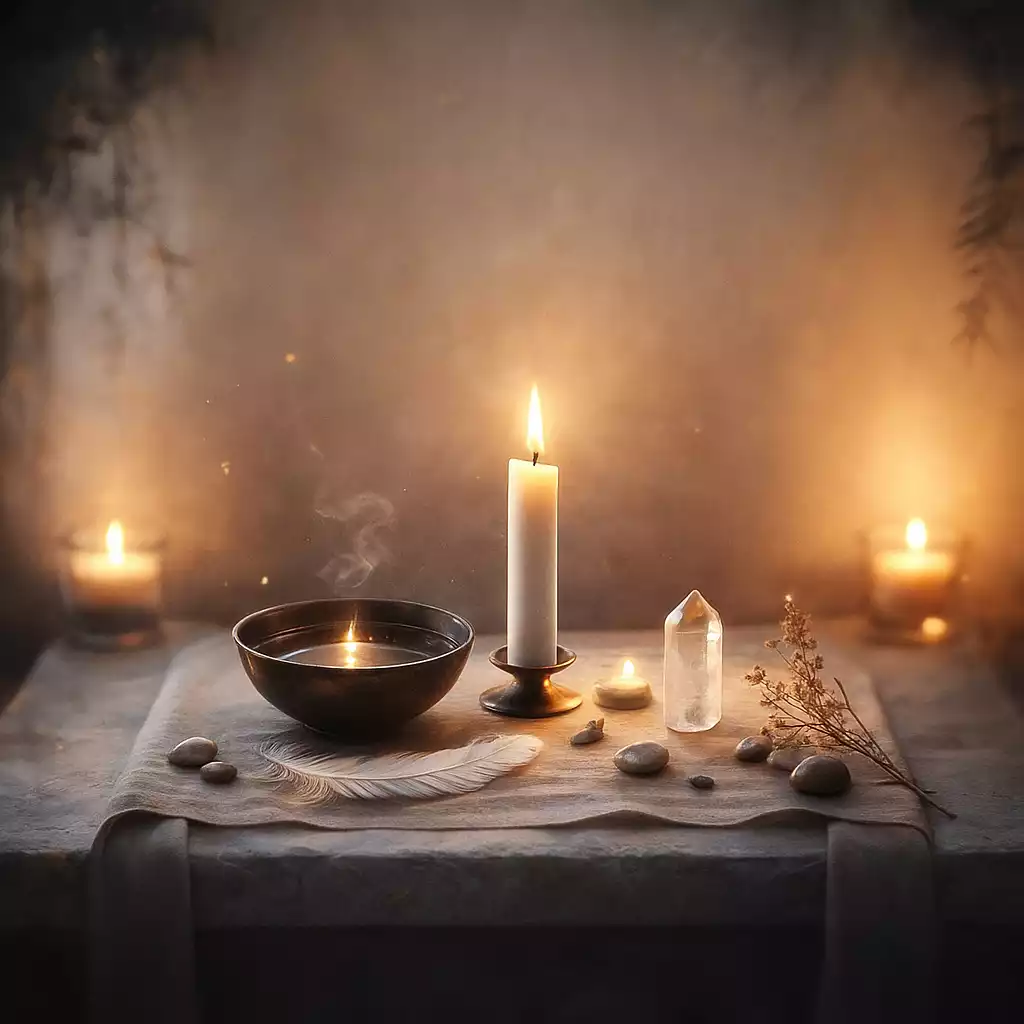
Sacred Spaces & Sacred Practices: Creating the Temple Within
There comes a moment in every seeker’s life when the noise of the world feels overwhelming. A moment when the mind has carried too much, when thoughts begin to blur at the edges, and when the spirit longs for a place untouched by chaos.
And then—sometimes gently, sometimes urgently—the call for a sacred space begins to rise.
Throughout history, sacred spaces have existed long before temples were carved or altars were built. The first sacred spaces lived in quiet corners of the earth: a circle drawn with a finger in the soil, the shade beneath a tree, the hush of a cave, the shoreline where waves met sand. These spaces did not need walls or structures or priestly permissions. They needed only intention.
To create a sacred space is to declare that a piece of the world—no matter how small—is set apart for stillness, connection, ritual, and truth. And in an age where distractions cling to every moment, the act of carving out such a space becomes an act of power.
The Nature of Sacred Space
A sacred space is not defined by how elaborate it is. It is defined by the shift it creates. Sometimes that shift is subtle, a softening of the air or a sense of quiet beginning to settle. Other times it feels like stepping through a doorway into another realm, where the mind opens, the heart steadies, and the spirit listens.
Sacred space is a meeting ground between the physical and the unseen. It is where the inner self rises to meet the divine—whatever shape the divine takes for the practitioner. It may hold symbols, candles, or objects, but what makes the space sacred is not the objects themselves. It is the intention woven through them.
A sacred space becomes a sanctuary, not because it is perfect, but because it is purposeful. Each time the practitioner returns to it, the space deepens. It becomes familiar, receptive, alive.
Why Sacred Spaces Matter
The world asks for constant attention. It demands energy, answers, presence, and performance. Sacred space offers the opposite: a pause. A deep breath. A moment outside of the current of daily obligations.
In a sacred space, clarity becomes easier to access. Thoughts slow. Feelings find room to unfold. Spells become more focused. Meditation becomes deeper. Ritual becomes more meaningful. A sacred space gathers intention the way a vessel gathers water, holding everything until the practitioner is ready to use it.
Most importantly, sacred space creates consistency in an inconsistent world. It becomes a spiritual anchor—a place to return to when everything else feels unstable.
Forms of Sacred Space
Sacred space can take many forms, each shaped by the practitioner’s needs and environment.
Some create physical spaces: a candlelit corner, a shelf arranged with sacred objects, a desk that doubles as an altar, a windowsill that catches morning light. These spaces may be ornate or simple. What matters is the purpose they serve.
Others work with temporary sacred spaces that appear only when needed. A single candle, a cloth laid across a table, a travel altar carried in a small pouch—these temporary spaces can be powerful, because they demonstrate that sacredness does not rely on permanence.
There are also internal sacred spaces that do not require any physical objects at all. These exist in the quieted mind, the deep breath, the inner temple visualized behind closed eyes. Internal sacred spaces can be entered anywhere, at any time.
And then there are energetic sacred spaces—circles cast, boundaries shaped, spheres of intention formed through visualization. These spaces rely on energy, not objects, and are especially potent for ritual or spellwork.
Each form of sacred space is equally valid. The path is chosen by the practitioner, not dictated by tradition.
Creating Your Sacred Space
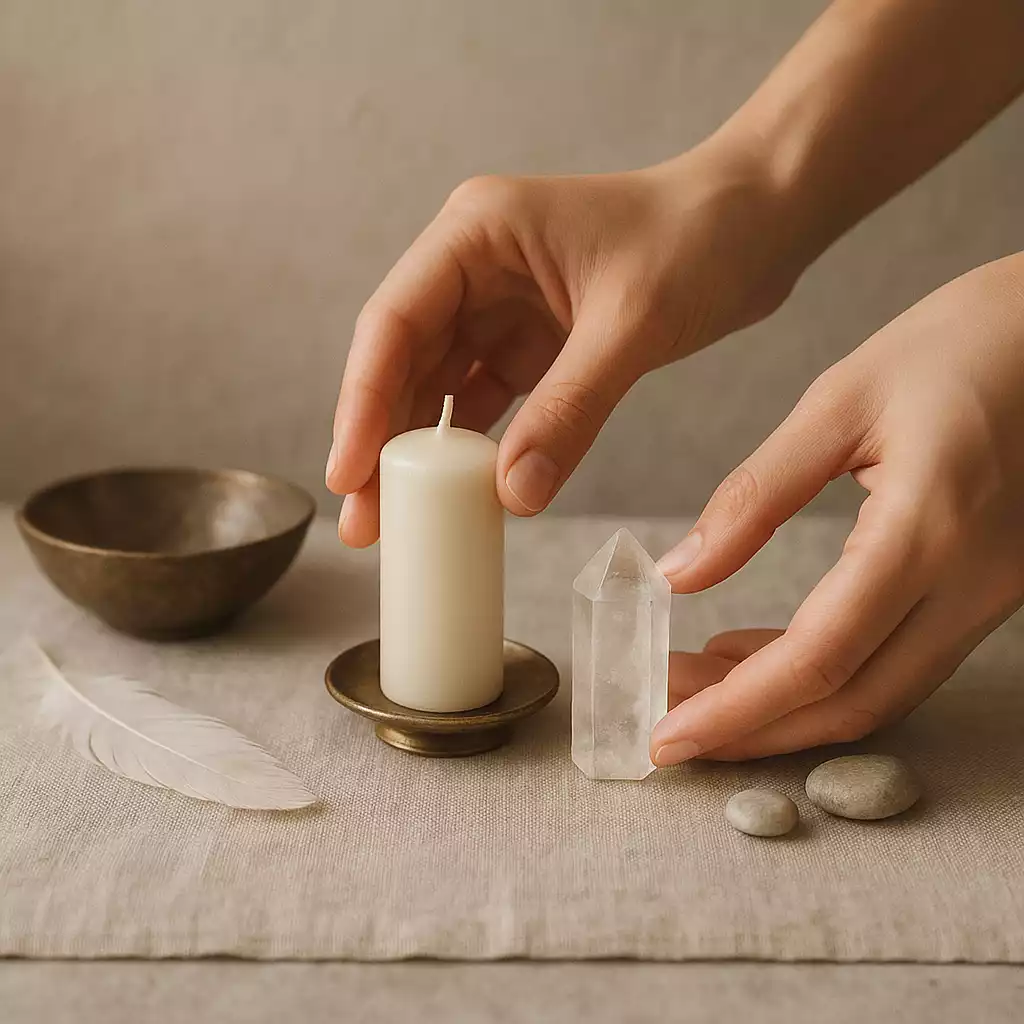
The creation of a sacred space begins long before an item is placed or a candle is lit. It begins with clearing—both of the physical environment and of the atmosphere itself. Dusting a shelf, opening a window, wiping a surface clean, or simply standing in silence and exhaling deeply—all of this prepares the space for the sacred to enter.
Once the physical and energetic space has been cleared, intention becomes the foundation. The purpose of the space should feel clear, even if the purpose is simply to find peace. Some choose to dedicate a space for meditation. Others dedicate it for spellwork, devotion, grounding, or healing. Intention is what transforms a corner into a sanctuary.
From here, sacred symbols may be added: a candle flame to bring focus, a stone to anchor energy, a feather to invite clarity, a bowl of water to soften the atmosphere. A practitioner may place objects that resonate—crystals, plants, shells, statues, cards, or items from nature. Not because these objects “make” the space sacred, but because they hold meaning.
Once the space is arranged, an invitation is extended. This can be a whisper, a spoken invocation, or a silent request for sacred presence to enter. The practitioner may call upon the universe, the earth, spirit guides, ancestors, or simply the quiet stillness itself. What is welcomed depends entirely on the practitioner’s path.
Finally, the space is consecrated. A candle flame may be lifted toward the altar. Water may be sprinkled gently. Smoke may drift across the objects. A hand may be placed above the space, blessing it with breath and intention.
After this moment, the space is no longer ordinary. It has been claimed, awakened, opened.
Sacred Practices Within the Space
The heart of sacred space lies not only in its creation but in how it is used.
One of the foundational practices is quieting—the art of slowing the inner world so the deeper layers can be accessed. Quieting is not silence. It is alignment. Through soft breathing, gentle focus, and intentional presence, quieting opens the gateway between the conscious mind and intuitive awareness.
Meditation and visioning are also deeply enhanced within sacred space. When the environment feels held, the practitioner can travel inward more easily. Symbolic imagery becomes clearer. Insights rise with less resistance. Guidance flows more freely.
Ritual and spellcraft take on greater potency in sacred space. Whether the practitioner is working with manifestation, protection, healing, cleansing, or lunar energies, sacred space amplifies intention. It gathers energy and directs it with precision.
Daily devotion can be woven into the space as well. Lighting a candle each morning, placing an offering, drawing a card, writing an intention, or simply resting a hand on the altar—these small acts build spiritual consistency. They anchor the day in sacredness.
Seasonal and lunar practices transform the space over time. A new moon may bring fresh intentions. A full moon may call for release. Solstices and equinoxes may inspire altar refreshes or deeper ritual work. Sacred space moves with the rhythms of nature, shifting as the seasons shift.
Ancestral connection can also take place here. A candle for a departed loved one, a whispered prayer, a moment of remembrance—these acts strengthen the bond between the seen and unseen.
Even shadow work finds stability in sacred space. Journaling, mirror gazing, emotional reflection, and deeper integration feel safer when the practitioner is held by a container that is familiar and intentional.
The sacred space becomes a companion in the journey, absorbing, supporting, and transforming alongside the one who tends it.
Sacred Objects and Their Correspondences

While sacred space does not depend on objects, many practitioners choose to work with items that hold symbolic meaning. A white candle may bring clarity. A black candle may offer grounding and protection. A piece of amethyst may invite intuition, while obsidian offers strength. Herbs such as rosemary, lavender, sage, or basil may support cleansing, peace, purification, or prosperity.
Crystals, botanicals, the four elements, and natural objects each hold their own correspondences. When placed with intention, they contribute layers of energy to the space. But even the simplest object—a stone found on a walk, a feather discovered unexpectedly—can become a sacred anchor when it is chosen with presence.
The Inner Sacred Space

Beyond any physical altar lies the most powerful sacred space of all: the inner sanctuary carried within the practitioner. This inner temple can be entered through breath, stillness, or imagination. It may appear as a chamber of light, a quiet room, a forest clearing, or a floating sphere of calm.
This sacred inner space cannot be disrupted by external events. It exists beneath thought and emotion, waiting patiently. Even in moments of difficulty, it remains accessible. It is the birthplace of intuition, clarity, and spiritual self-connection.
The more often it is visited, the stronger it becomes.
A Ritual for Creating Sacred Space
To create a sacred space using the simplest form of ritual, choose a place where you feel undisturbed. Sit comfortably and light a candle. Let its glow soften your thoughts. Place a bowl of water before you and touch it briefly, feeling its cool, steady presence.
Close your eyes and breathe until your mind grows calm. When ready, say softly:
“I create a space for the sacred to dwell.”
Place an object of significance—a stone, a feather, a symbol—before you. Move your hand gently above the space, as if smoothing invisible threads.
When you feel the atmosphere shift, whisper:
“This space is sacred. This space is alive.”
In that moment, the temple is opened.
A Simple Daily Sacred Practice
Begin the day by sitting before your sacred space. Light a candle, even if only for a moment. Take three slow breaths, letting each exhale release the weight of the previous day.
Rest your hand over your heart or solar center and whisper an intention:
“Let this day unfold with clarity and presence.”
Close with gratitude. This small ritual quietly transforms the energy of the entire day.
The Sanctuary That Lives Through You
Sacred space is not limited to one corner of a room. It is something that grows through practice, deepens through attention, and eventually becomes woven into the practitioner’s life. Every time the sacred space is used, it becomes more responsive, more alive.
Sacred practices turn the ordinary into the extraordinary. They turn breath into devotion. They turn moments into rituals. They turn a simple corner into a place where the divine is felt.
In the end, every sacred space leads back to the same truth:
The sanctuary you create in the world teaches you how to recognize the sanctuary that already exists within you.
Wherever you stand with intention, a temple awakens.
Last Updated on December 26, 2025 by Abigail Adams


Comment (1)
Thank you, this is such a beautiful outline for a beginner such as myself. I can so easily relate to your writings and your descriptions are well written and easy to understand. Thank you, thank you!